Desks Designed for Stylish Home Workspaces
A desk can create a defined working area without making the room feel like a conventional office. In a dedicated home office or study, the desk can become the practical centre of the space, providing a clear surface for everyday work while complementing storage, lighting and seating. In bedrooms or multifunctional living areas, a more compact design can establish a useful workspace without dominating the room.
The best home office desks balance function with the visual character of their surroundings. Elegant office desks with refined proportions or decorative details can sit comfortably within more traditional or layered interiors, while stylish office desks with cleaner lines can suit contemporary spaces. When choosing, consider the finish, shape and scale alongside furniture already in the room rather than treating the desk as a separate workplace item.
Luxury desks are particularly effective where the working area is visible from the rest of the home. A desk that relates to nearby wood tones, colours and furniture styles helps the workspace feel intentional, even when the room has more than one purpose.
Find a Desk to Suit the Way You Work
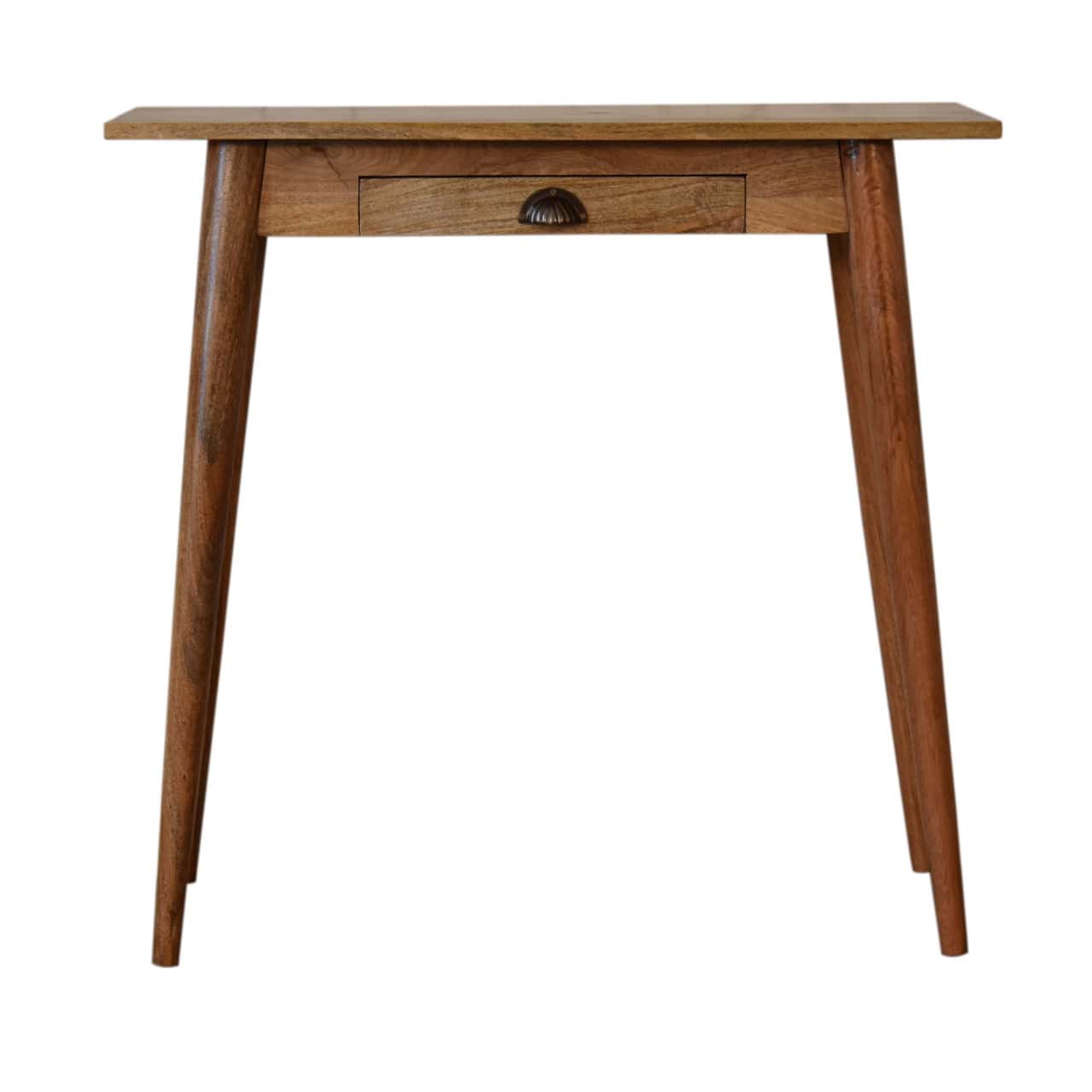
The way you use a desk should influence the type you choose. Compact and mini writing desks are well suited to lighter use, occasional writing or smaller spaces where a full-sized workstation would take up too much room. They can provide enough surface area for a laptop, notebook or everyday essentials while keeping the overall footprint restrained.
For regular home working, a larger writing desk can offer more room for equipment and paperwork. Desks with drawers or built-in storage are useful when smaller items need to stay close at hand but off the main surface, helping chargers, stationery and documents remain organised without adding separate storage furniture.
Classic writing desks suit customers who want a straightforward working surface with a more furniture-led appearance, while decorative and statement designs can play a stronger role in the room. These may be better suited to spaces where the desk remains visible when it is not being used.
Think about your daily routine rather than simply choosing the largest option available. A desk for occasional correspondence has different requirements from one used throughout the working week. Matching surface area, storage and scale to the way you work will usually result in a more practical and comfortable choice.
Writing Desks, Decorative Desks and Statement Designs
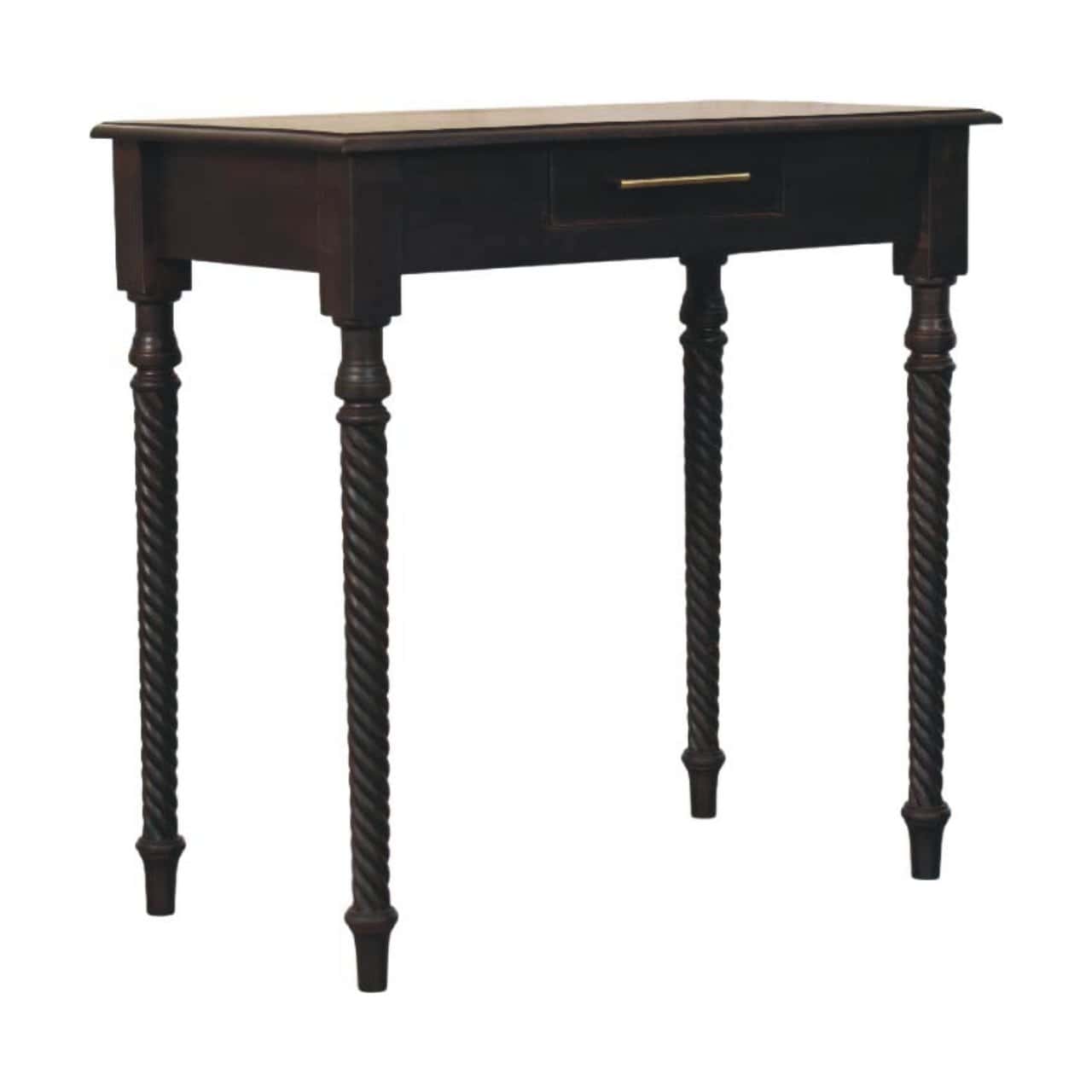
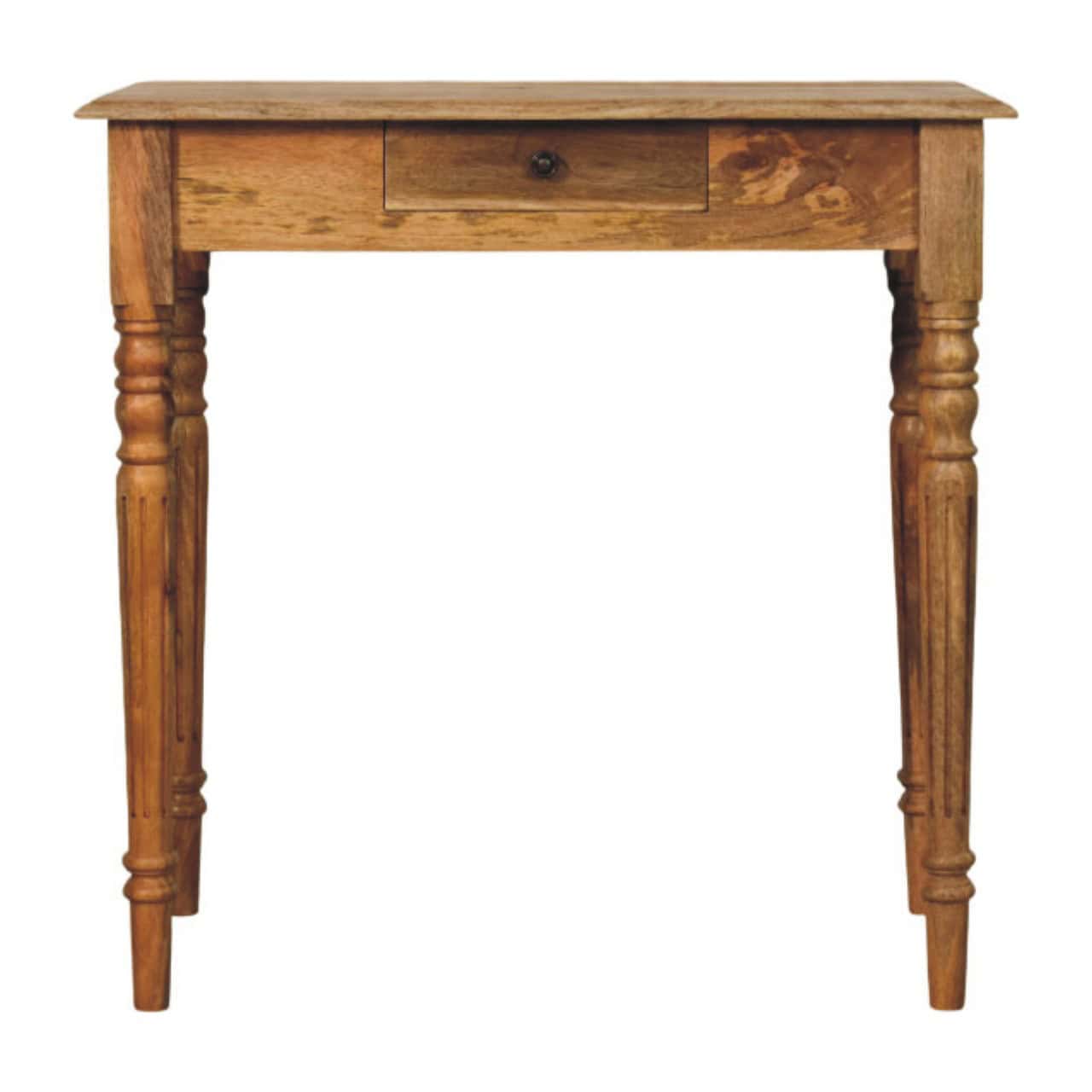
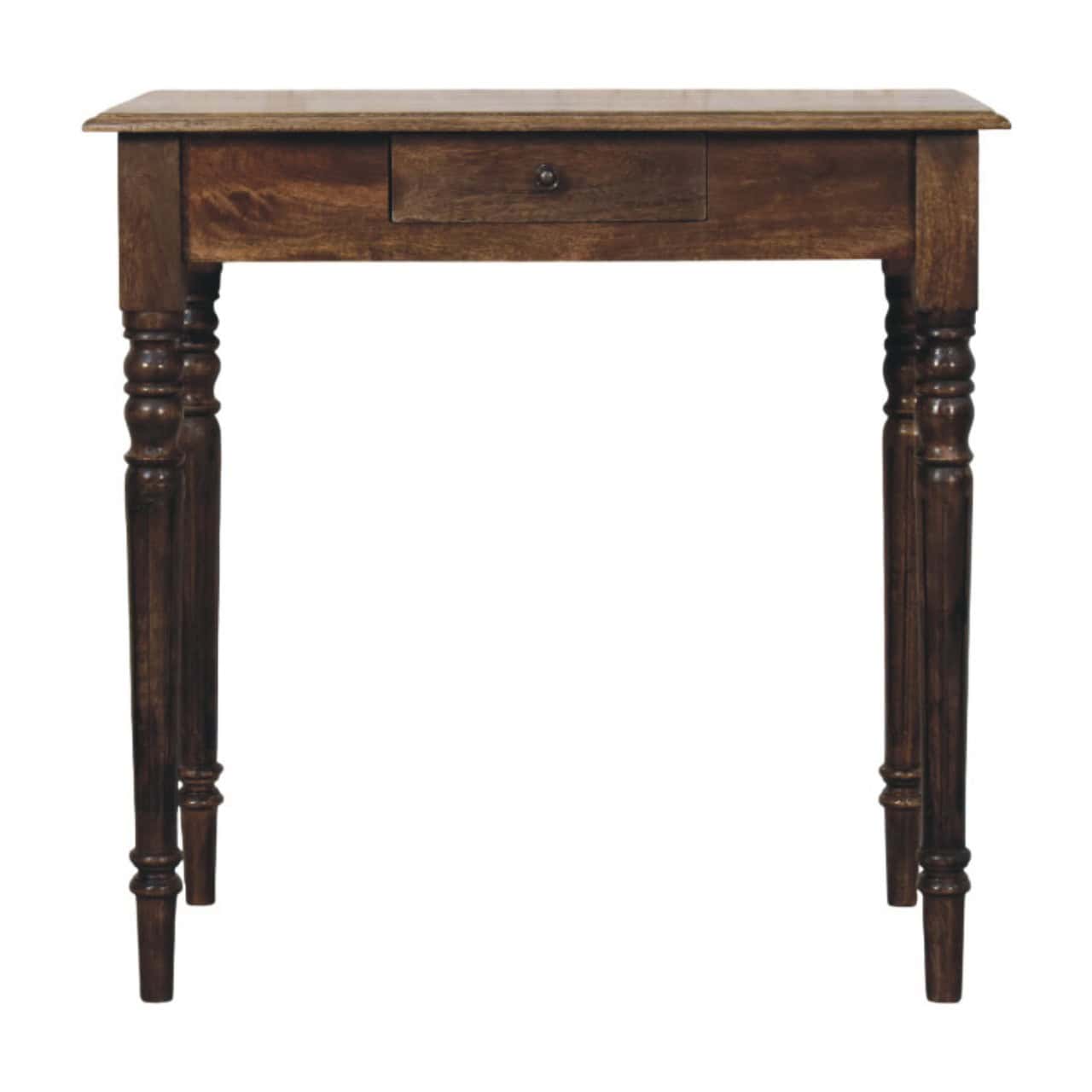
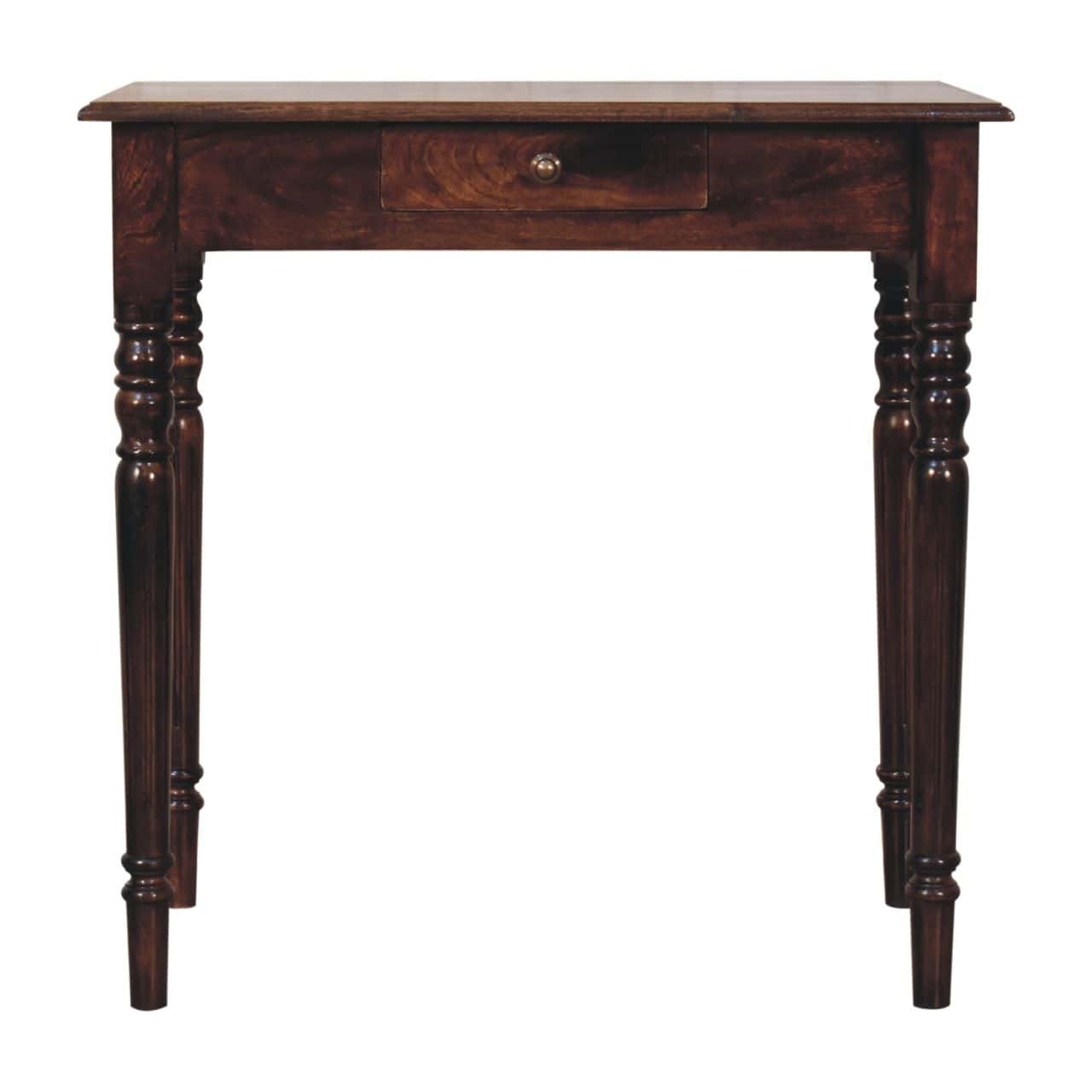
Not every desk needs to look like conventional office furniture. Writing desks often have lighter proportions and a more decorative character, making them suitable for studies, bedrooms and living areas as well as dedicated workspaces. Traditional influences such as turned legs and classic detailing can give a desk a more established furniture feel, while contemporary writing desks may use cleaner lines, curved edges or simpler silhouettes.
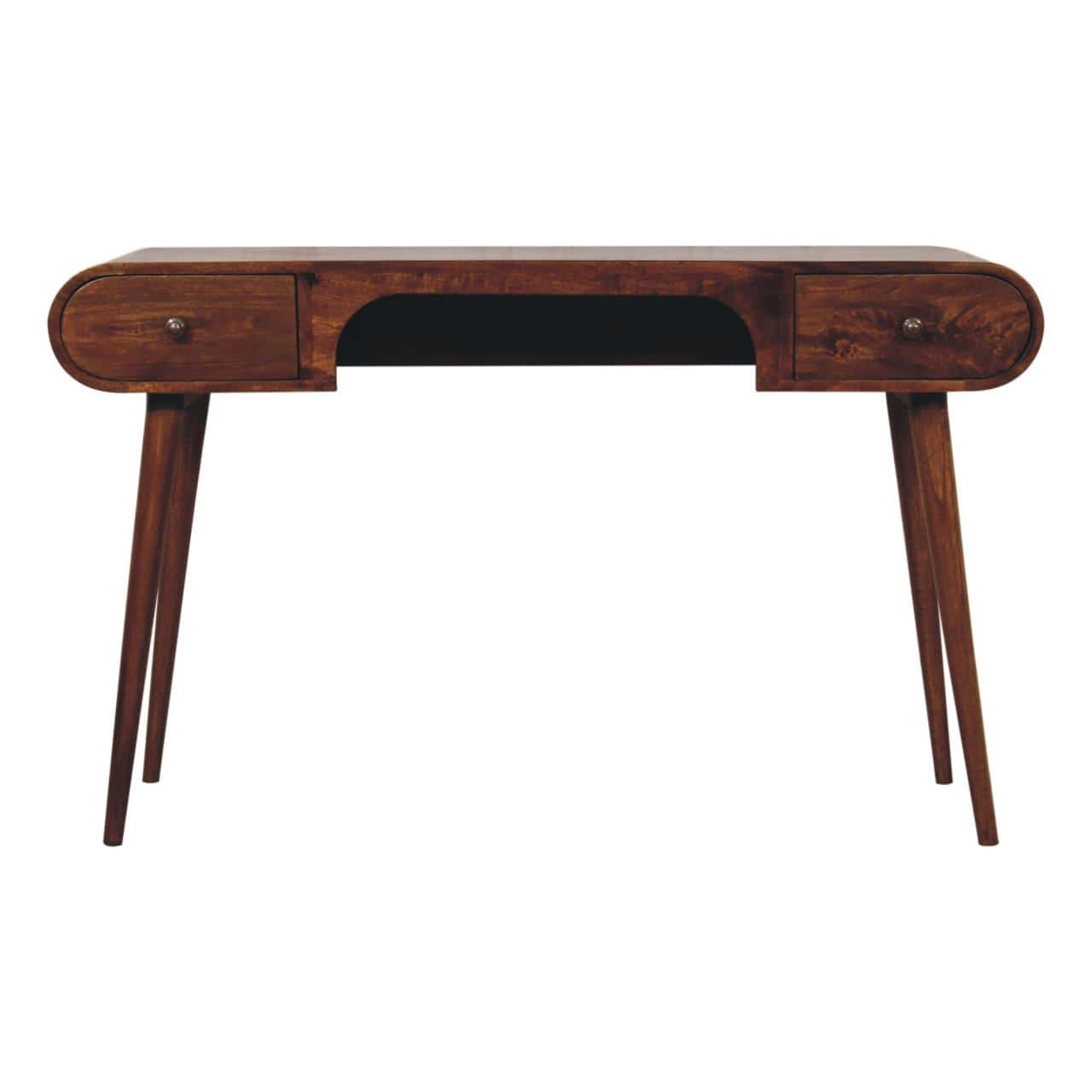
Decorative office desks can also introduce texture, shape or a distinctive finish into a room. Curved forms soften straighter furniture, while turned-leg designs bring more visible detail below the desktop. Painted finishes, carved elements and statement shapes can make the desk feel deliberately chosen as part of the interior rather than added purely for practical reasons.
For a stronger focal point, a statement desk can anchor a working area even when the surrounding furniture is relatively understated. In contrast, a simpler writing desk can blend more quietly with existing pieces. The key is to decide how much visual presence you want the desk to have. Whether traditional, contemporary or more decorative, these designs can provide a useful working surface while also contributing to the character of the room when the working day is finished.
Wooden Desks for Classic and Contemporary Interiors
Wooden home office desks can bring warmth and a more furniture-led feel to a workspace, particularly when their finish relates to other pieces in the room. The current range includes Chestnut and oak-ish or oak-style finishes, alongside painted, Nordic-inspired and more decorative looks. Lighter finishes can feel softer and more understated, while deeper Chestnut tones can give the desk greater visual presence.
For customers looking for oak-style office desks for home, it is important to distinguish between an oak-style or oak-ish finish and the underlying material. A desk should only be described as oak where its individual product information confirms that material. The same applies to solid wood office desks. Selected designs are confirmed at product level as solid wood, including pieces made from solid mango wood, but that construction should not be assumed across the full range.
Painted and decorative finishes provide alternatives to a natural-looking wood surface and can introduce contrast within neutral or contemporary interiors. Checking the individual specification will give the clearest picture of both material and finish before choosing.
Choosing a Desk That Complements Your Interior
A desk will feel settled within the room when its finish and proportions relate to the surroundings. Matching similar wood tones can create a coordinated look, while deliberately contrasting a darker desk with lighter furniture can give the working area more definition. Painted or decorative finishes can also provide contrast without requiring the desk to match every nearby piece.
For a traditional scheme, an elegant office desk with turned legs or classic detailing can reinforce the character of the room. A stylish office desk with cleaner lines, curved forms or a restrained finish may suit a more contemporary setting. Decorative office desks can work as statement pieces where the rest of the furniture is simpler.
The aim is not necessarily to create a matching set. Repeating one or two details, such as a wood tone, colour or shape, is often enough to make the desk feel connected to the wider room while still allowing it to have its own identity.
Making the Most of Your Desk Space
Think about how much usable surface area you need before choosing a desk. A laptop and notebook require less room than multiple screens, paperwork or equipment used throughout the day, so a larger desktop is only beneficial when the extra space will genuinely be used. Drawers can keep stationery, cables and smaller items accessible without allowing them to take over the main working surface.
Pair the desk with a chair that fits comfortably beneath or alongside it, leaving enough room to sit and move without crowding nearby furniture. Keeping frequently used items within easy reach can make the workspace more practical, but avoid filling every part of the desktop with storage or accessories.
In a smaller room, a compact writing desk can create a defined working area without taking up unnecessary floor space. Measure the available width and depth carefully and prioritise the surface and storage features that matter most.
Luxury Desks Beyond the Home Office
Luxury desks are not limited to dedicated home offices. A well-proportioned writing desk can create a useful study area in a bedroom, provide an occasional workspace in a guest room or form a quieter writing corner within a living space. Compact designs are particularly useful where the desk needs to share a room with other furniture.
More decorative desks can also work as furniture in their own right, giving a wall or underused area purpose even when they are not being used for work. In a study, the desk may take centre stage; in a bedroom or living room, it can play a more subtle supporting role. This versatility makes it possible to choose a design according to both its practical purpose and how naturally it fits the wider interior.
Frequently Asked Questions About Luxury Desks
What makes a desk a luxury desk?
A luxury desk typically combines considered design, proportions, finish and practical function. Decorative detailing, distinctive shapes and carefully chosen materials or finishes can all contribute, but luxury does not depend on one particular style or material.
What type of desk is best for a home office?
The best desk depends on how often you work from home, the equipment you use and the space available. Regular working may benefit from a larger surface and drawers, while lighter or occasional use can suit a more compact writing desk.
What is the difference between a writing desk and an office desk?
A writing desk is often lighter in scale and designed around a straightforward working surface, sometimes with limited storage. Office desks can encompass a broader range of sizes and configurations designed for more regular working and equipment.
Are wooden desks suitable for home offices?
Yes. Wooden desks can work particularly well in home offices because different wood tones and finishes can be coordinated with surrounding furniture while still providing a practical working surface.
Are desks with drawers useful for home working?
Yes. Drawers can keep stationery, documents, chargers and smaller everyday items within reach while reducing clutter on the main desktop, making them particularly useful for regular home working.
How do I choose a desk for a small room?
Measure the available width and depth and look for a compact desk that provides enough surface area for your essential equipment. Avoid choosing unnecessary storage or an oversized desktop if it will restrict movement around the room.
Can a luxury desk be used outside a home office?
Yes. Writing and decorative desks can work in bedrooms, studies, guest rooms and living spaces, particularly when their proportions and finish allow them to sit naturally alongside other furniture.
How should I choose a desk to match my interior?
Consider the desk’s wood tone, colour, finish, shape and level of detailing alongside existing furniture. It can either coordinate closely with the room or provide deliberate contrast as a statement piece.