Choosing the Right TV Unit for Your Living Room
Start with the television itself, then consider how much floor or wall space is available around it. The width of the unit should relate comfortably to the screen, leaving enough visual space for the arrangement to feel balanced rather than cramped. A larger television may need a broader unit beneath it, while a compact screen can look more natural on a smaller piece.
Viewing position matters too. Consider the relationship between the television, the sofa and the height of the unit so the screen sits comfortably within the room rather than feeling disconnected from the seating area. If the unit also needs to hold media equipment, streaming devices or other accessories, check the internal and open storage before choosing.
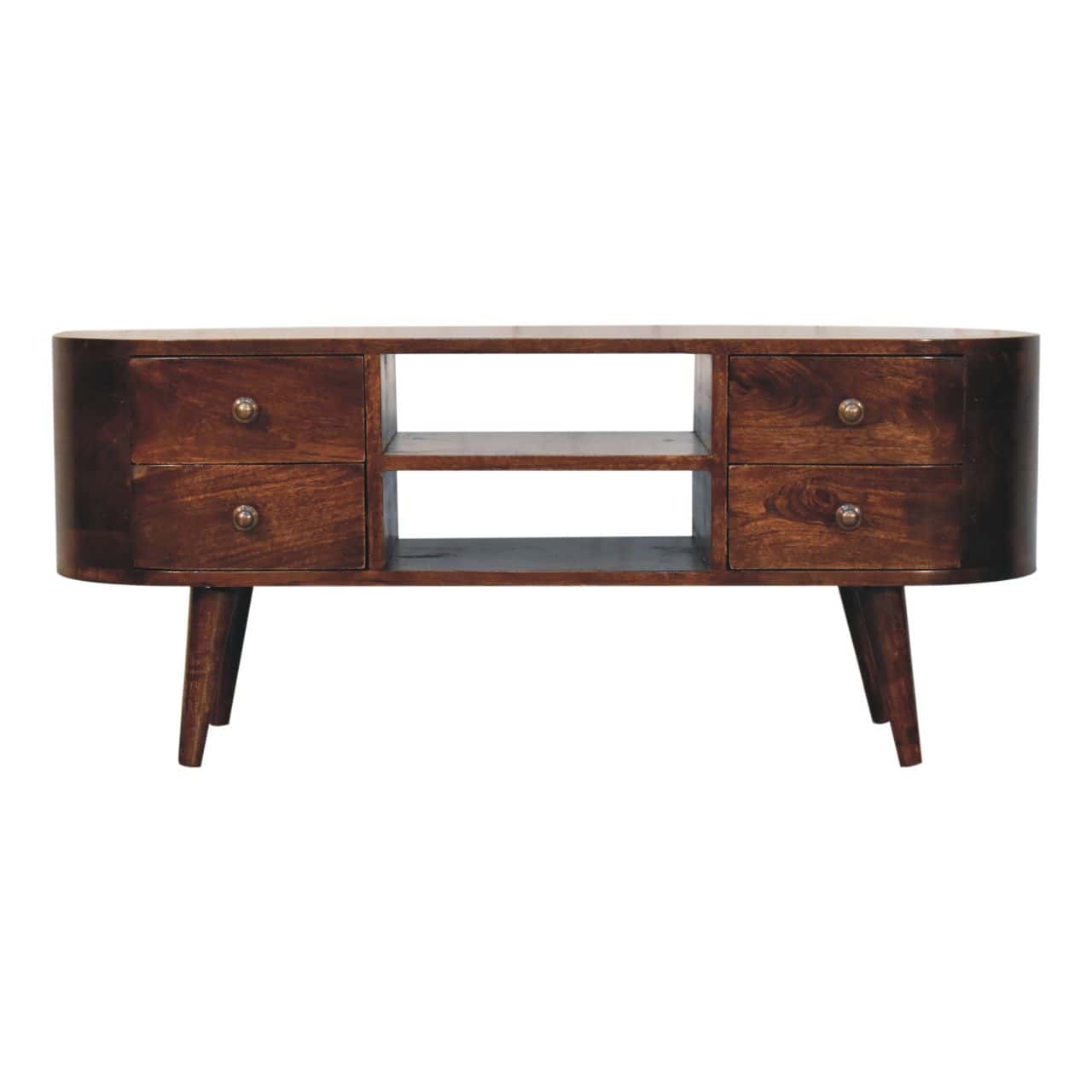
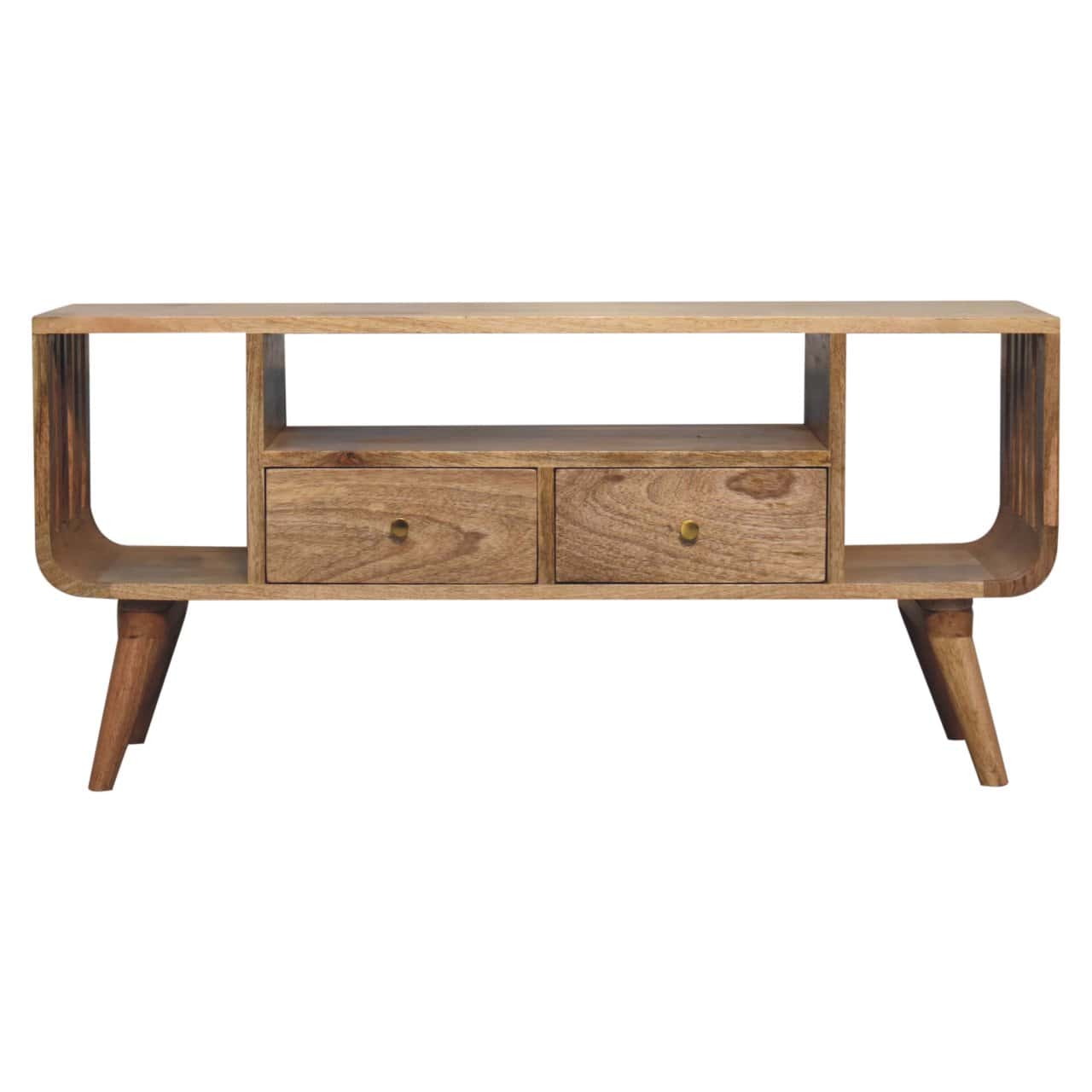
Open shelving keeps equipment visible and easy to reach, while drawers and cupboards can conceal smaller items and reduce visual clutter. Mixed configurations offer both options. The overall proportions should suit the room as well as the television: an oversized unit can dominate a compact living space, while one that is too small may look lost against a wide wall. Measure the available area and allow clearance around doors, walkways and nearby furniture.
TV Stands, Media Cabinets and Entertainment Units
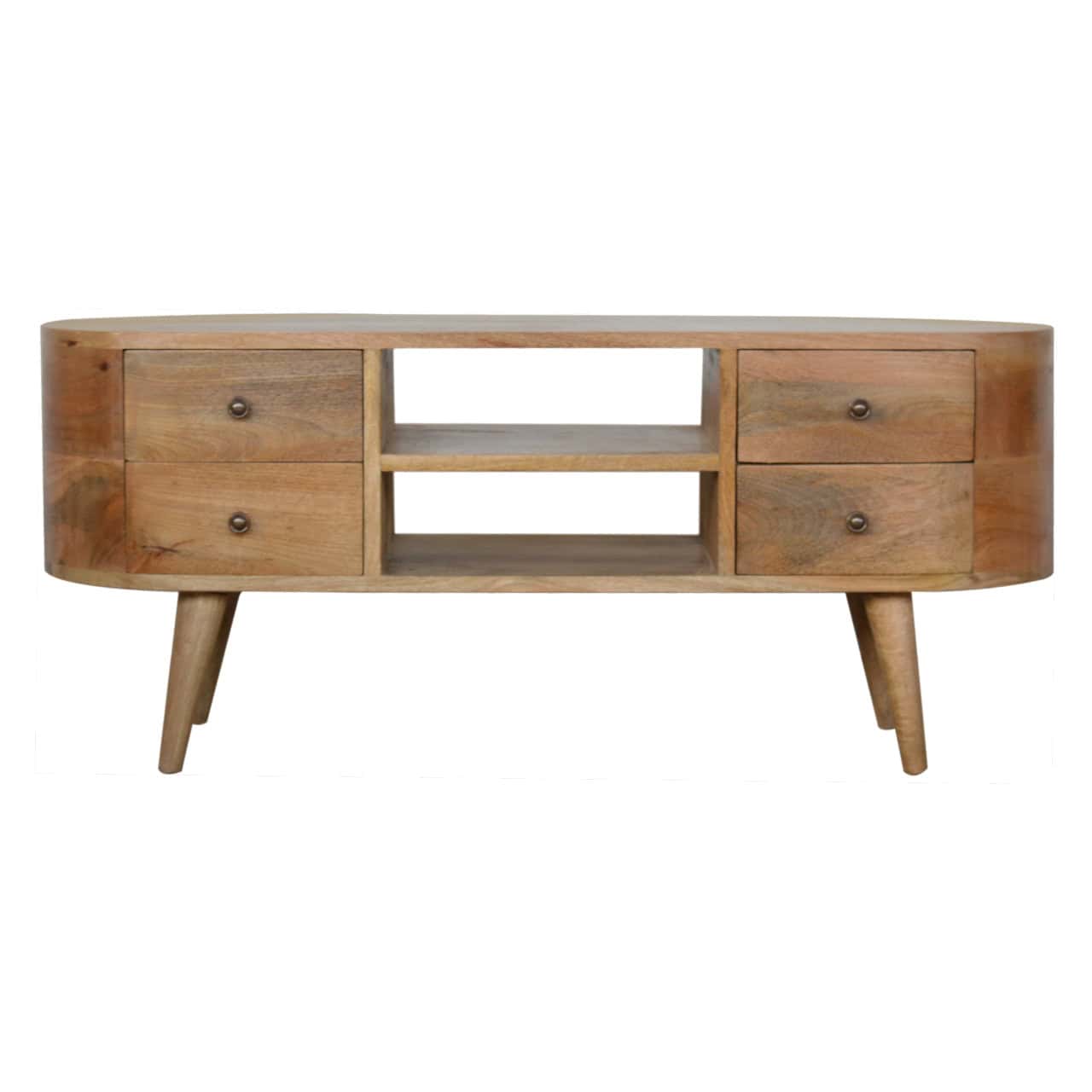
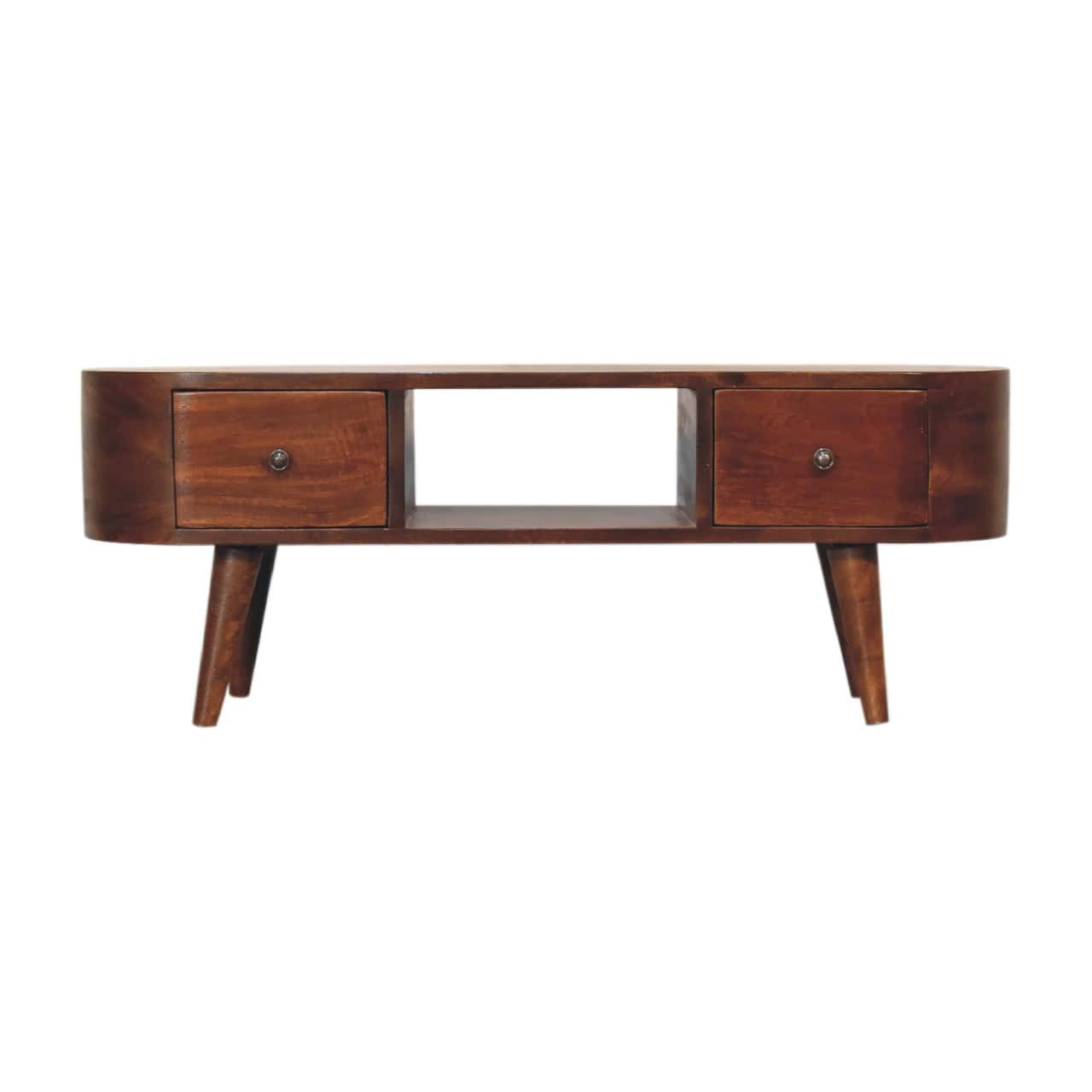
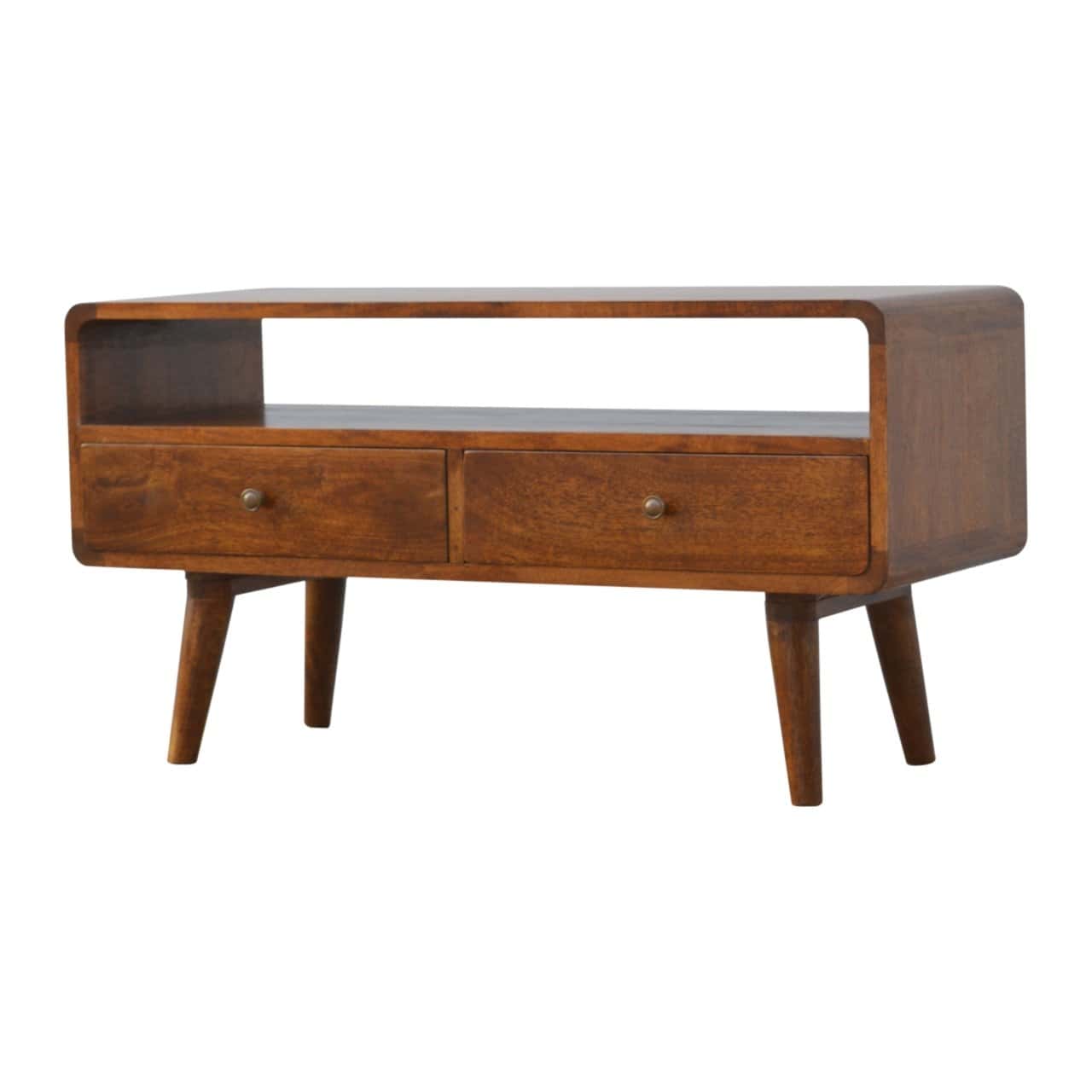
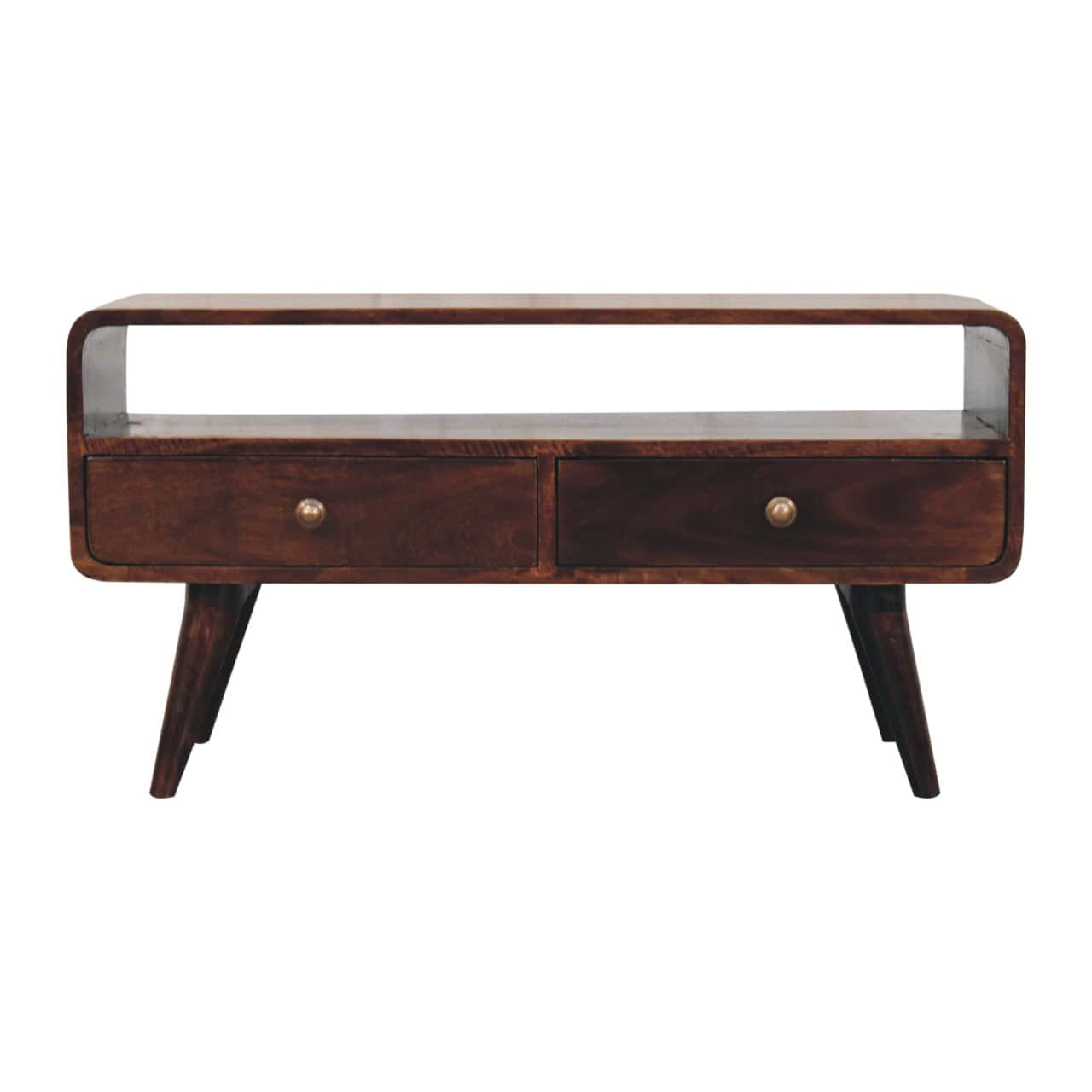
Luxury TV stands are generally lower-profile pieces designed to support a television while providing some degree of storage beneath or around it. Depending on the design, this may include open shelving, drawers, cupboards or a combination of these. Their lower silhouette can work well where the television is intended to remain the main visual focus.
Luxury media cabinets place greater emphasis on storage, offering more enclosed space for living-room belongings alongside suitable media accessories. Designer TV cabinets can combine this practical role with more decorative fronts, distinctive proportions or stronger finishes, allowing the furniture to contribute more visibly to the room.
Designer entertainment units can also include larger or more substantial formats where the available space allows, creating a stronger furniture presence around the television. Some designs favour clean open sections for accessibility, while others use drawers or doors to keep smaller items out of sight.
The best format depends on what needs to sit on, inside or around the unit. If the priority is simply supporting the television, a streamlined stand may be enough. If you also need meaningful storage, a cabinet or mixed-format entertainment unit can offer greater flexibility without requiring separate furniture for every media-related item.
Find a TV Unit With the Right Storage
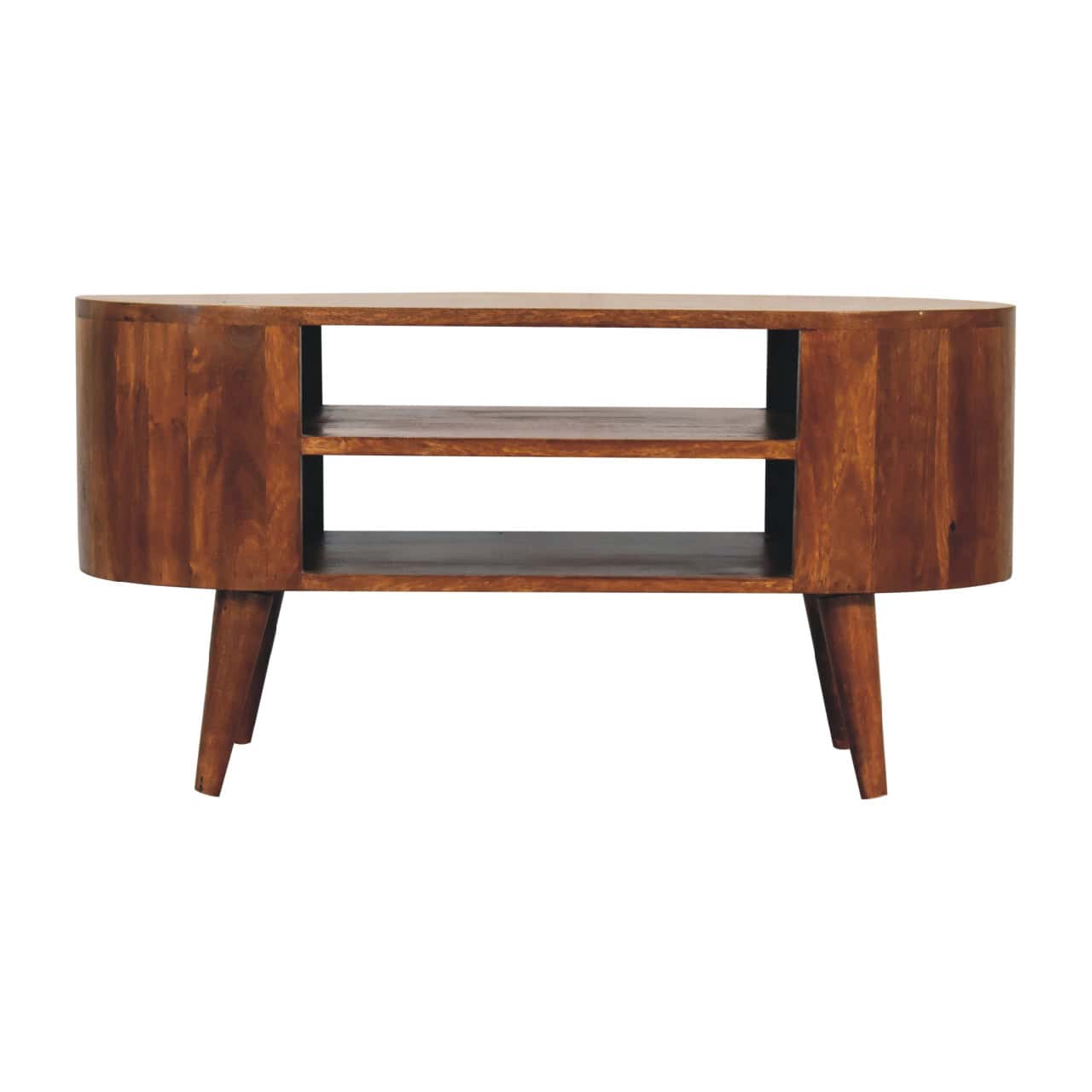
The right storage configuration depends on the equipment and everyday items you want to keep near the television. Open shelves are useful for media accessories that need to remain easy to reach, including streaming devices or games consoles where the individual unit provides suitable space for them. They can also hold books or a small number of decorative objects without hiding everything behind doors.
Drawers are better suited to smaller belongings such as remote controls, cables and accessories that can otherwise create visible clutter. Cupboards provide more enclosed storage for items you do not need to access constantly, helping the entertainment area feel calmer when the television is not in use.
Mixed storage combines these benefits by pairing open sections with drawers or cupboards. This can be particularly useful where some media equipment needs accessible placement while other living-room items are better kept out of sight.
Not every unit is designed around specific electronics, so check the product dimensions and storage layout before assuming that a console or device will fit. Think about what you use most often, what needs ventilation or easy access, and what you would rather conceal when choosing between open, enclosed and mixed formats.
Designing Around Your Television
A TV unit often becomes a visual anchor because the television naturally draws attention to that part of the room. The furniture beneath it should therefore relate to the screen in width and proportion. A unit that extends comfortably beyond the television can create a more settled composition, while a very narrow unit beneath a large screen may feel visually unbalanced.
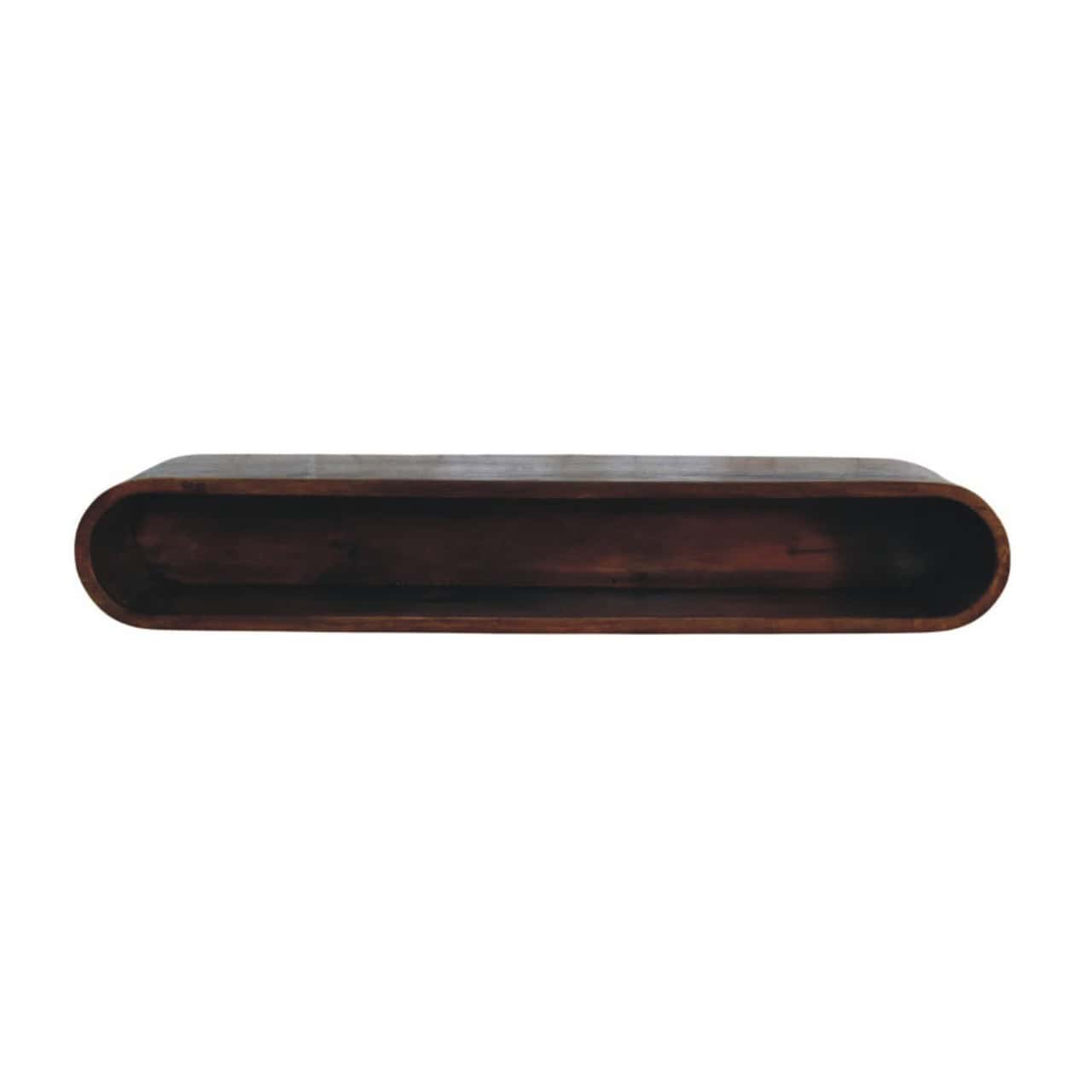
Surrounding wall space matters too. A broad wall can accommodate a more substantial entertainment unit, whereas a compact room may benefit from a lower-profile or wall-mounted design that reduces visual weight. Consider the viewing position from the main sofa and how the unit aligns with the seating.
Nearby coffee tables, side tables and cabinets also influence the overall composition. Repeating a finish or shape can connect the pieces, but everything does not need to match. An oversized unit can overwhelm a small room, while a small unit can look insignificant against a large wall. Choose a scale that feels intentional alongside both the television and the furniture around it.
Contemporary and Modern TV Stands
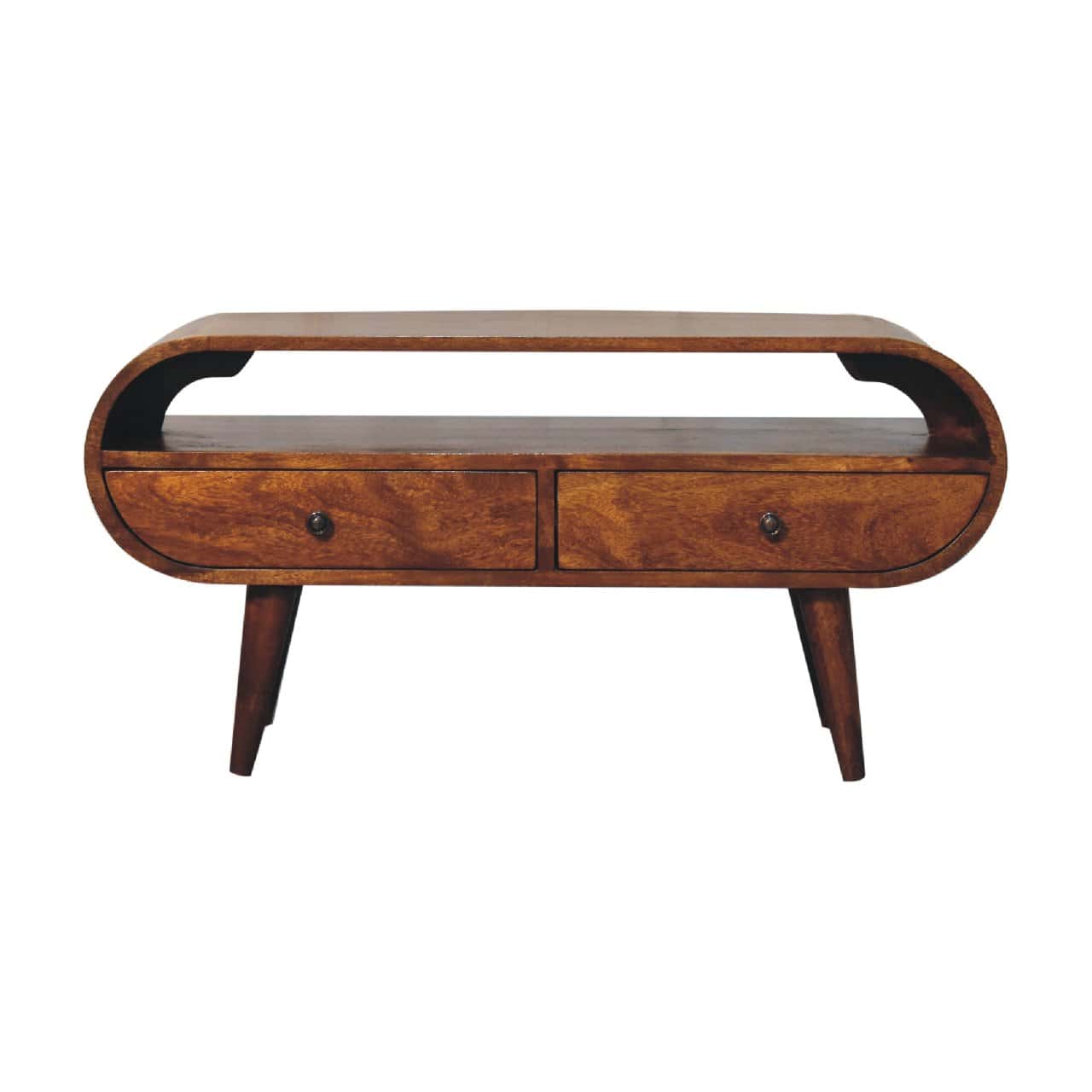
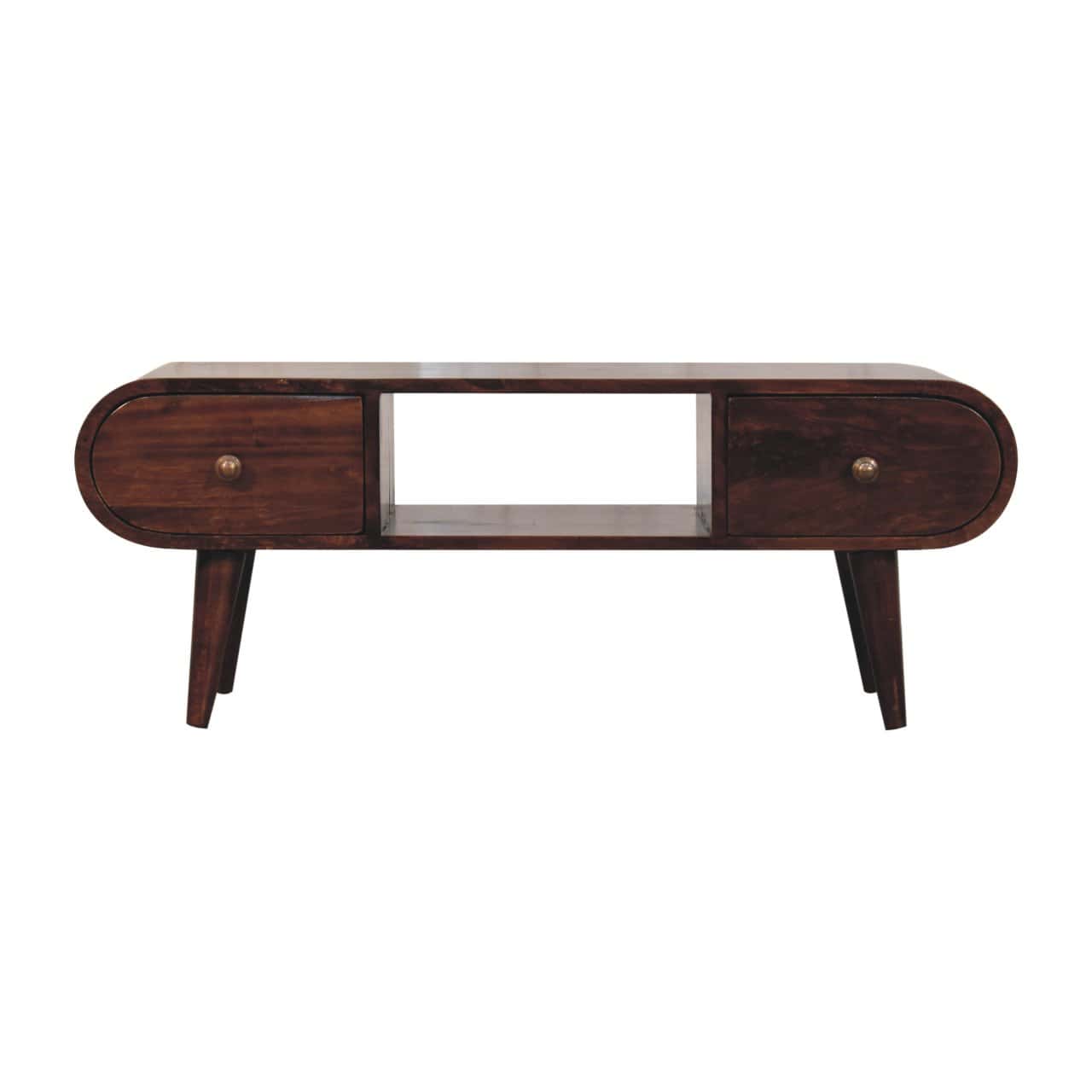
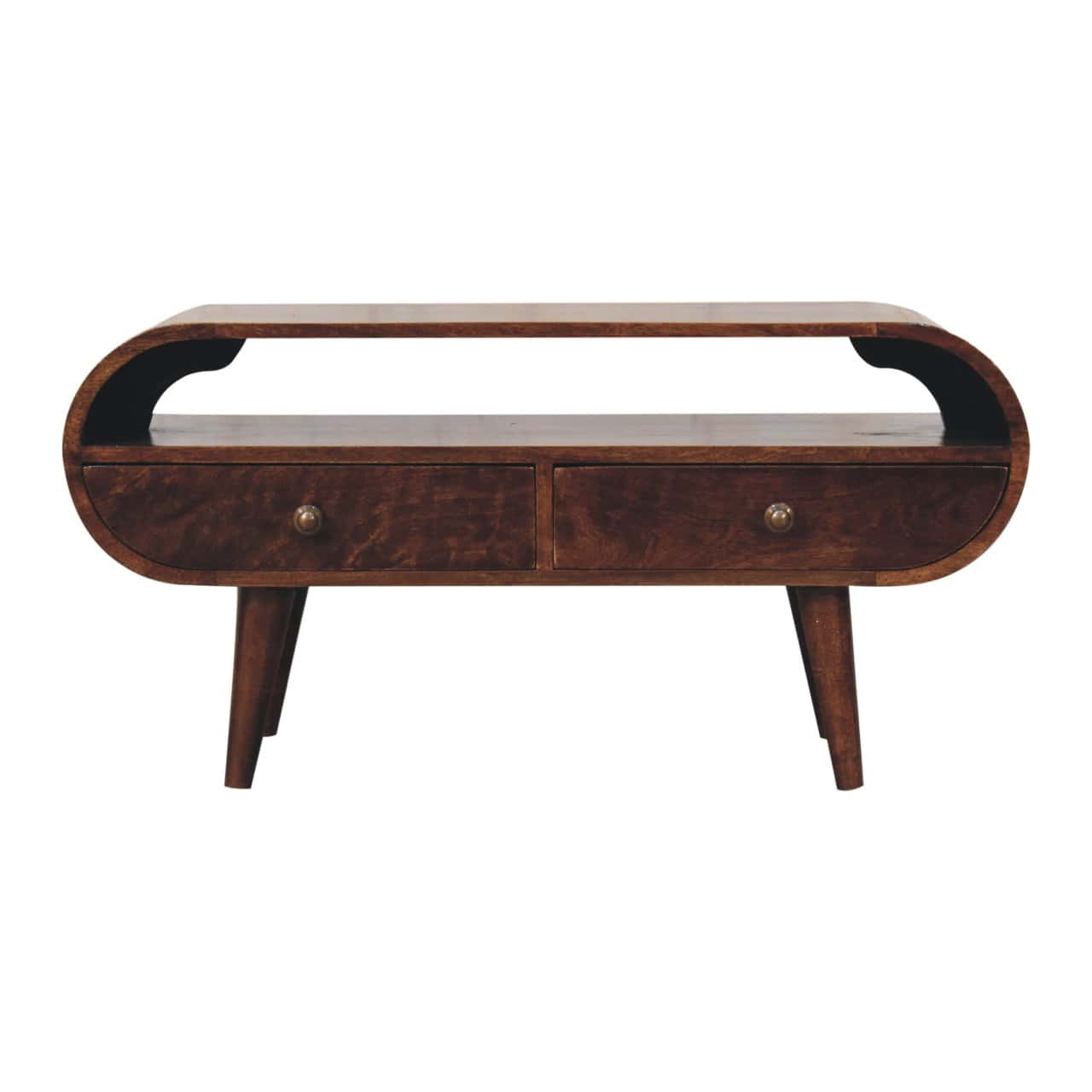
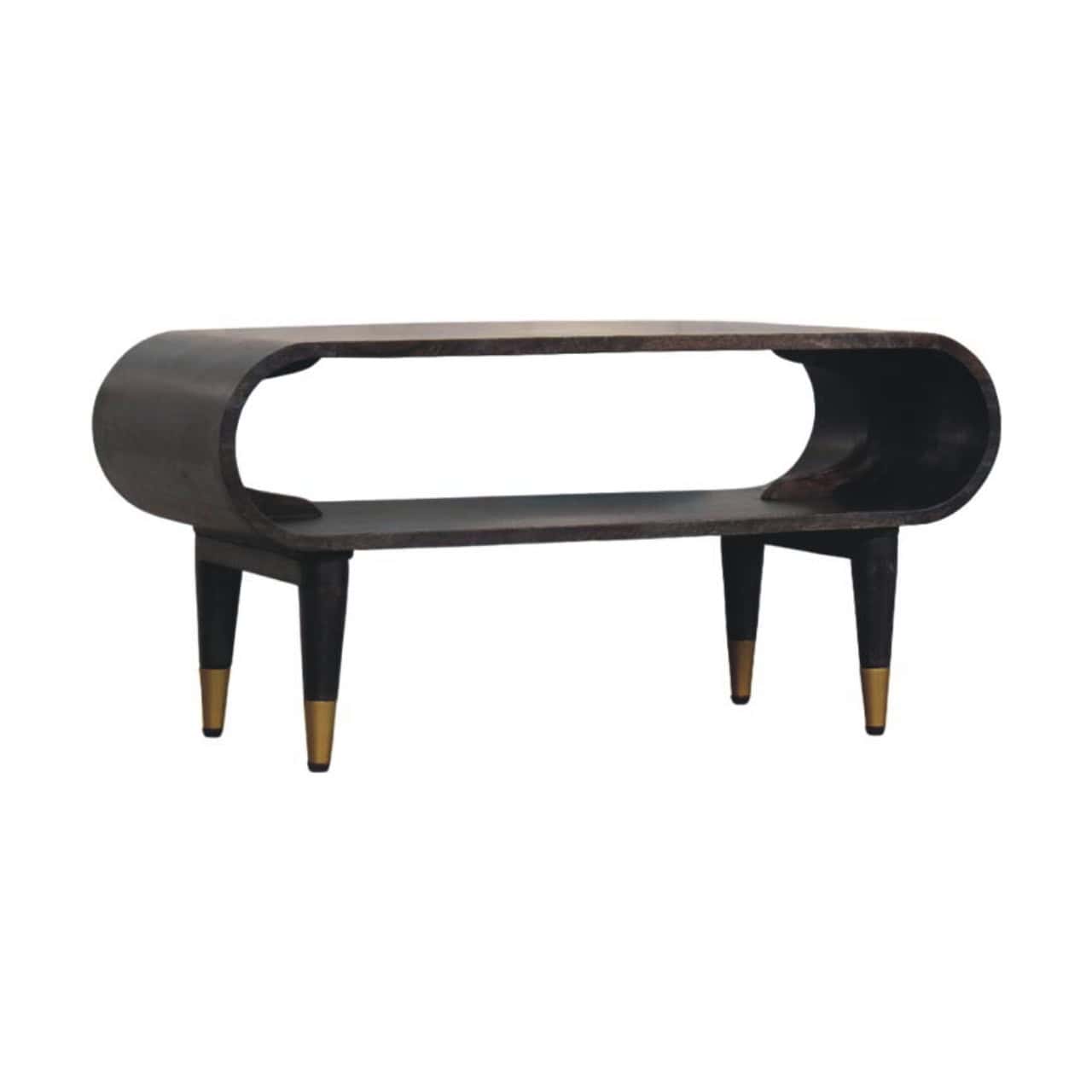
Luxury modern TV stands can give the television area a cleaner, more integrated appearance, particularly in rooms with contemporary seating and lighting. Designs with simple lines, low-profile silhouettes and restrained fronts keep the focus on proportion rather than heavy decoration. Curved edges and geometric forms can add interest while maintaining a modern overall look.
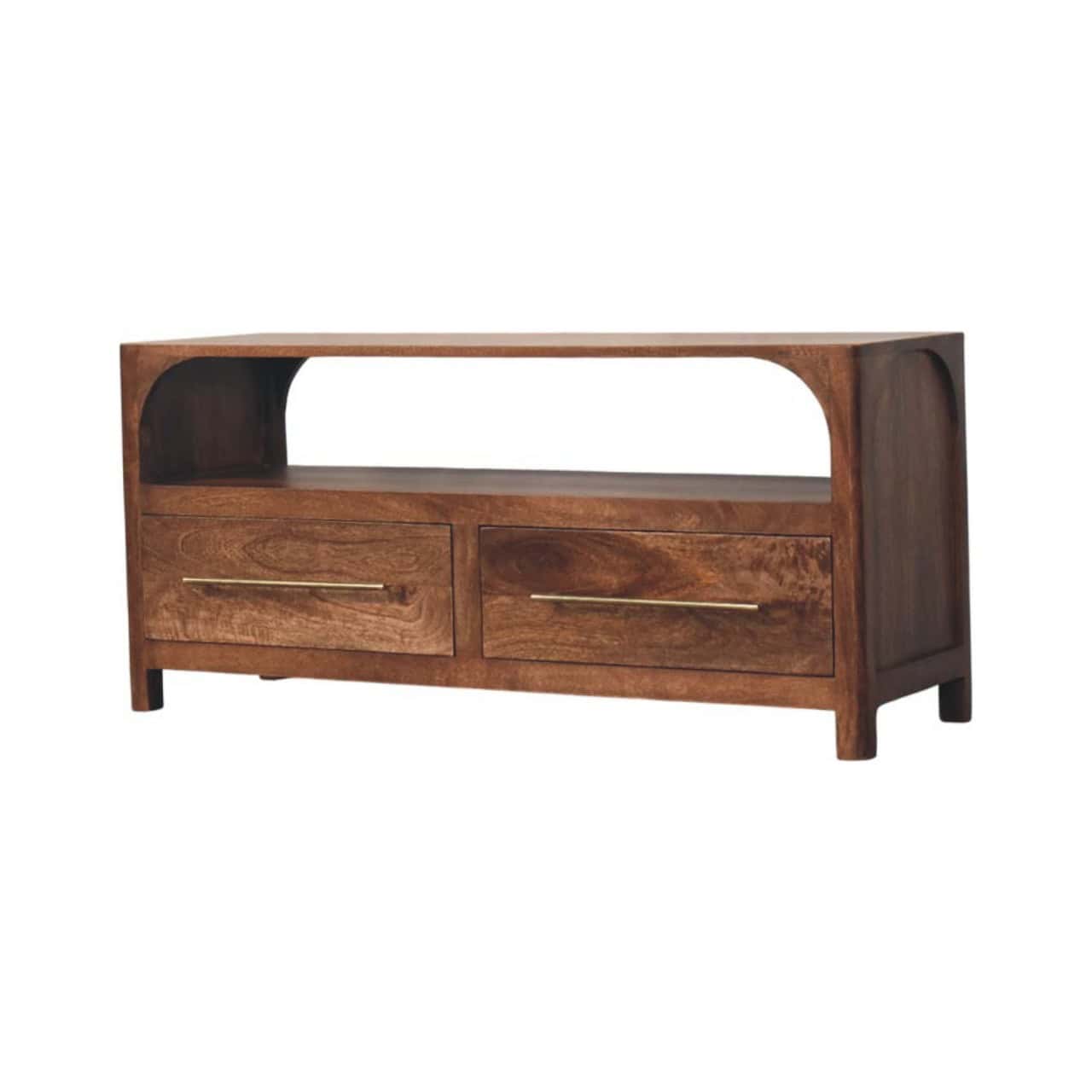
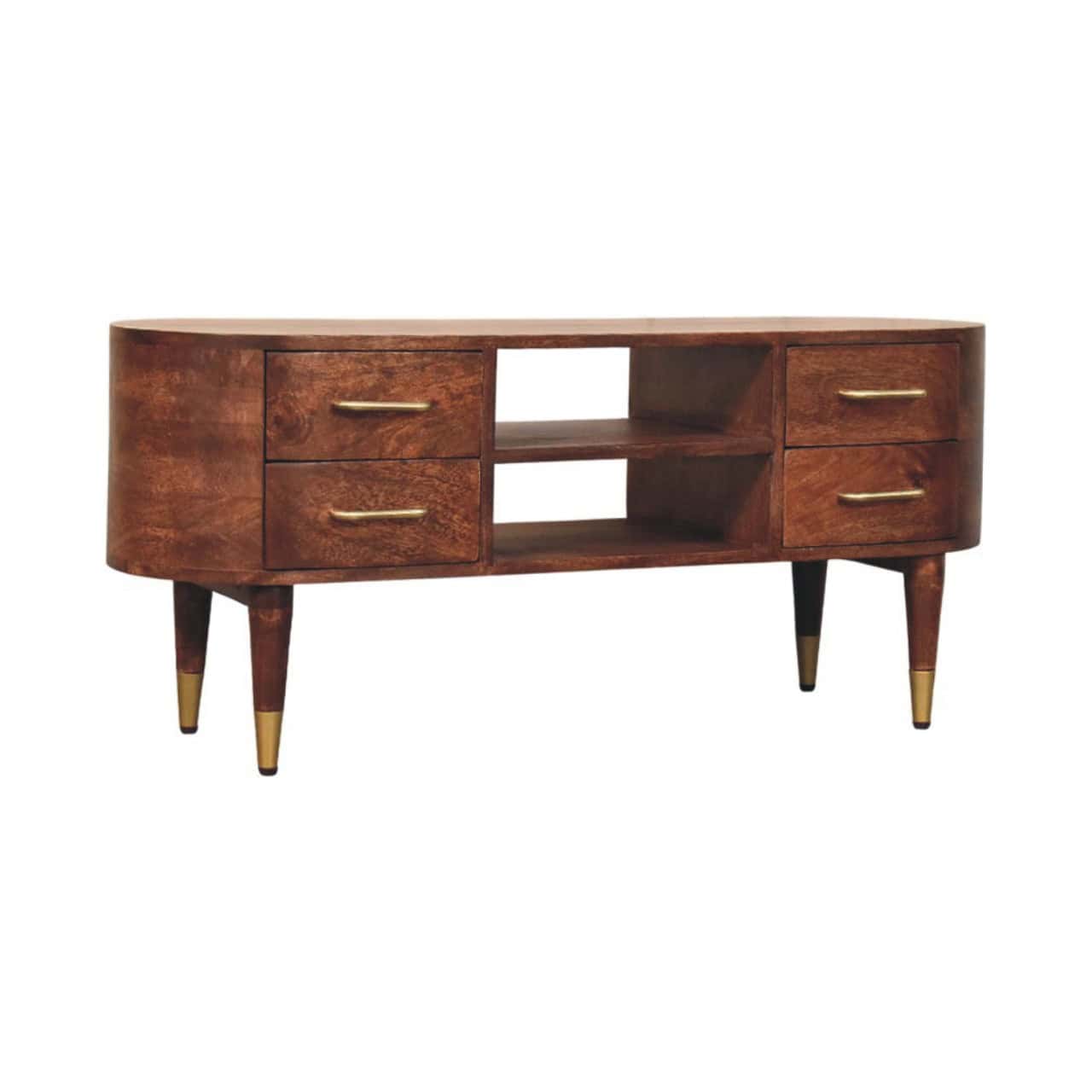
Contemporary finishes range from lighter wood tones to deeper Chestnut and darker looks, with modern hardware and mixed storage helping individual pieces feel more architectural. Some units combine open sections with drawers, while wall-mounted formats reduce the amount of furniture meeting the floor and create a lighter visual effect.
Mixed materials or contrasting details can add definition where genuinely represented, but strong modern schemes often rely on a limited number of finishes repeated across the room. Pairing a streamlined TV unit with a contemporary sofa, simple lighting and an understated coffee table can create continuity without making the furniture feel like a matching set. The most suitable design should support the television while fitting naturally into the wider visual language of the room.
Designer Entertainment Units With Character
Designer entertainment units can bring more character to the television area through shape, surface detail and finish. Distinctive silhouettes, curved edges, decorative cabinet fronts and sculptural elements can turn media furniture into a feature rather than something chosen purely to hold equipment. Statement finishes or unusual hardware can provide contrast against a quieter wall or more restrained seating.
Designer TV cabinets are particularly effective when the television is not the only point of interest. A decorative front, natural grain or carefully shaped form can give the furniture its own presence even when the screen is switched off. This helps the unit feel like part of the interior rather than purely functional electronics furniture.
Statement pieces still need to work with the room around them. If the cabinet has a detailed surface or unusual form, simpler accessories and nearby furniture can prevent the area becoming visually crowded. Conversely, a cleaner unit can sit comfortably beneath artwork, lighting or more expressive seating. Design-led media furniture works best when decorative character is balanced with the practical storage and screen space you actually need.
Materials and Finishes for Luxury Media Furniture
Materials and finishes influence how substantial, warm or contemporary media furniture feels within the room. Wood and wooden finishes are strongly represented, including pieces where individual specifications confirm solid mango wood and visible natural grain. Chestnut and oak-ish finishes also appear across selected designs, creating different levels of warmth without implying that every piece uses the same timber.
Decorative cabinet fronts, textured surfaces and shaped edges can add depth even where the overall colour is restrained. Selected designs also use metallic hardware or contrasting details to introduce a sharper accent against wooden surfaces. Wall-mounted and open-form pieces can feel visually lighter, while deeper wood tones and more enclosed cabinets create a stronger furniture presence.
Because materials and construction vary between products, check the individual specification rather than assuming a finish describes the underlying material. A lighter finish can coordinate easily with neutral seating, while darker or richer tones can create contrast against pale walls and flooring. Choosing the finish in relation to nearby furniture helps the entertainment unit feel integrated rather than isolated.
Open or Enclosed TV Storage?
Open TV storage keeps equipment and accessories visible and easy to reach. Shelves can be useful for suitable media devices, books or decorative objects, particularly when regular access matters. The trade-off is that cables, controllers and smaller items may remain more visible unless they are carefully organised.
Enclosed storage creates a calmer appearance by keeping everyday belongings behind doors or inside drawers. This can work well when you want the furniture to look more like a living-room cabinet when the television is not being used.
Mixed storage offers a practical middle ground. Open sections can accommodate items that need to remain accessible, while drawers or cupboards conceal remotes, cables and other accessories. The best configuration depends on what you actually need to store and display rather than one format being universally better. Check the individual unit layout before choosing, especially if specific equipment needs particular dimensions, access or ventilation.
Creating a Complete Living Room Around Your TV Unit
The entertainment unit should work with the rest of the living room rather than feeling like a separate media zone. Start with its relationship to the main sofa, making sure the television is positioned naturally for viewing and the furniture beneath it feels proportionate to the seating area.
Nearby coffee tables, side tables and living-room cabinets can connect visually through a repeated wood tone, shape or metal detail without matching exactly. A contrasting finish can work just as well when it is used deliberately. Rugs, lamps and decorative accessories can then help soften the transition between the television area and the rest of the room.
Consider linking the unit with existing sofas, coffee tables, side tables and living-room cabinets. Repeating one or two materials or colours is usually enough to create cohesion while allowing each piece to retain its own character.
Luxury TV and Entertainment Units From Dukes Home Interiors
Luxury TV and entertainment units from Dukes Home Interiors include TV stands, media cabinets and larger entertainment furniture with a variety of storage configurations. Open shelving, drawers, cupboards and mixed formats provide different ways to organise media accessories and everyday living-room items, while contemporary and designer-inspired shapes offer both understated and more decorative options. Wood finishes, natural grain, textured details and selected metallic accents provide varied visual directions, with compact, wall-mounted and more substantial pieces suited to different room layouts. Whether you need a streamlined stand or more storage-led furniture, the range balances media function with interior design. Explore the wider living room furniture collection to coordinate the television area with seating, tables and storage.
Frequently Asked Questions About TV and Entertainment Units
How do I choose the right TV unit size?
Start with the width of your television and the available wall or floor space. The unit should feel proportionate to the screen while leaving enough clearance around surrounding furniture and walkways.
Should a TV stand be wider than the television?
It often looks more balanced when the stand extends beyond the television on either side, but there is no single rule for every room. Consider the screen size, unit proportions and available wall space together.
What should I store in an entertainment unit?
Depending on the configuration, entertainment units can hold media accessories, remote controls, cables, books and decorative objects. Suitable designs may also accommodate streaming devices or games consoles where the individual dimensions and layout allow.
Are TV cabinets better with doors or open shelves?
Open shelves provide easier access and keep equipment visible, while doors and drawers conceal smaller belongings and reduce visible clutter. Mixed storage can provide the benefits of both.
What is the difference between a TV stand and an entertainment unit?
A TV stand is usually a lower-profile piece designed primarily to support the television, while an entertainment unit can offer more extensive storage or a larger furniture presence around the media area.
How do I choose a modern TV stand?
Look at proportions, storage needs and the wider style of the room. Clean lines, low-profile shapes, curved forms and restrained finishes can work well within contemporary interiors.
Can a media cabinet be used for games consoles and streaming equipment?
Yes, where the individual unit provides suitable dimensions, access and ventilation. Always check the product specification rather than assuming every media cabinet is designed for specific electronics.
How do I style a TV unit in my living room?
Keep the area balanced rather than overcrowded. A small number of books, decorative objects, lighting or accessories can complement the unit, while repeating selected finishes from nearby furniture can help connect it with the wider room.