Why Choose Dukes Home Interiors?
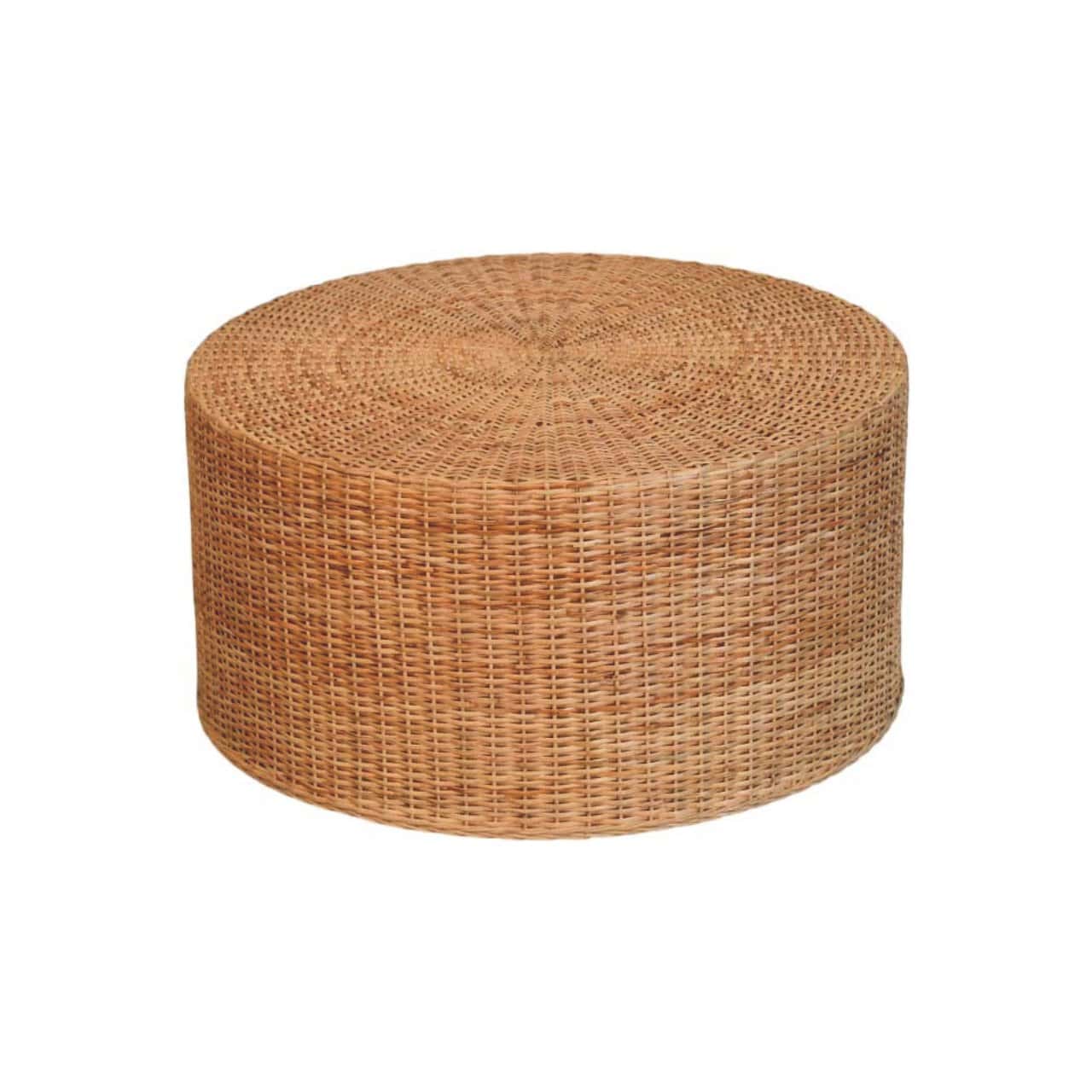
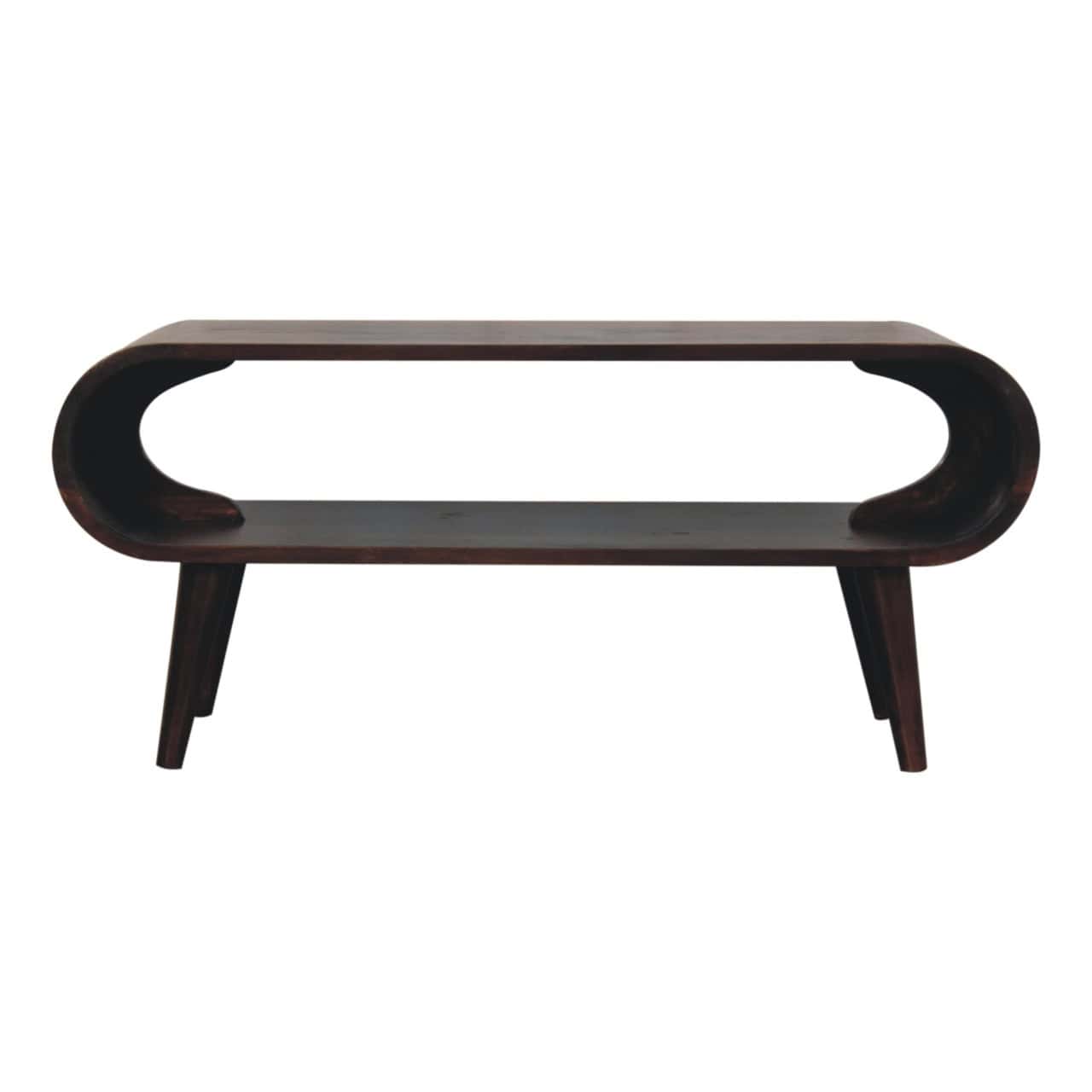
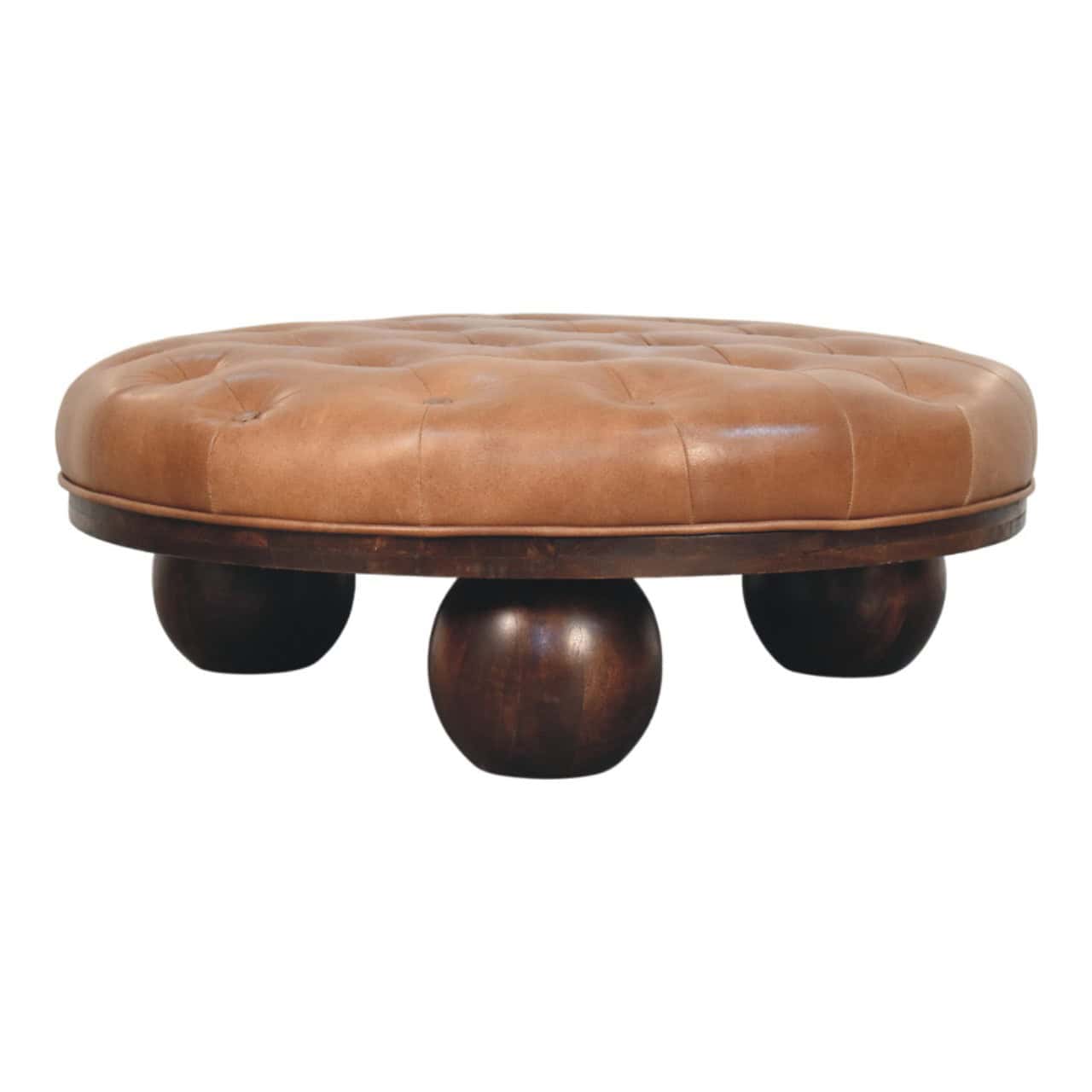
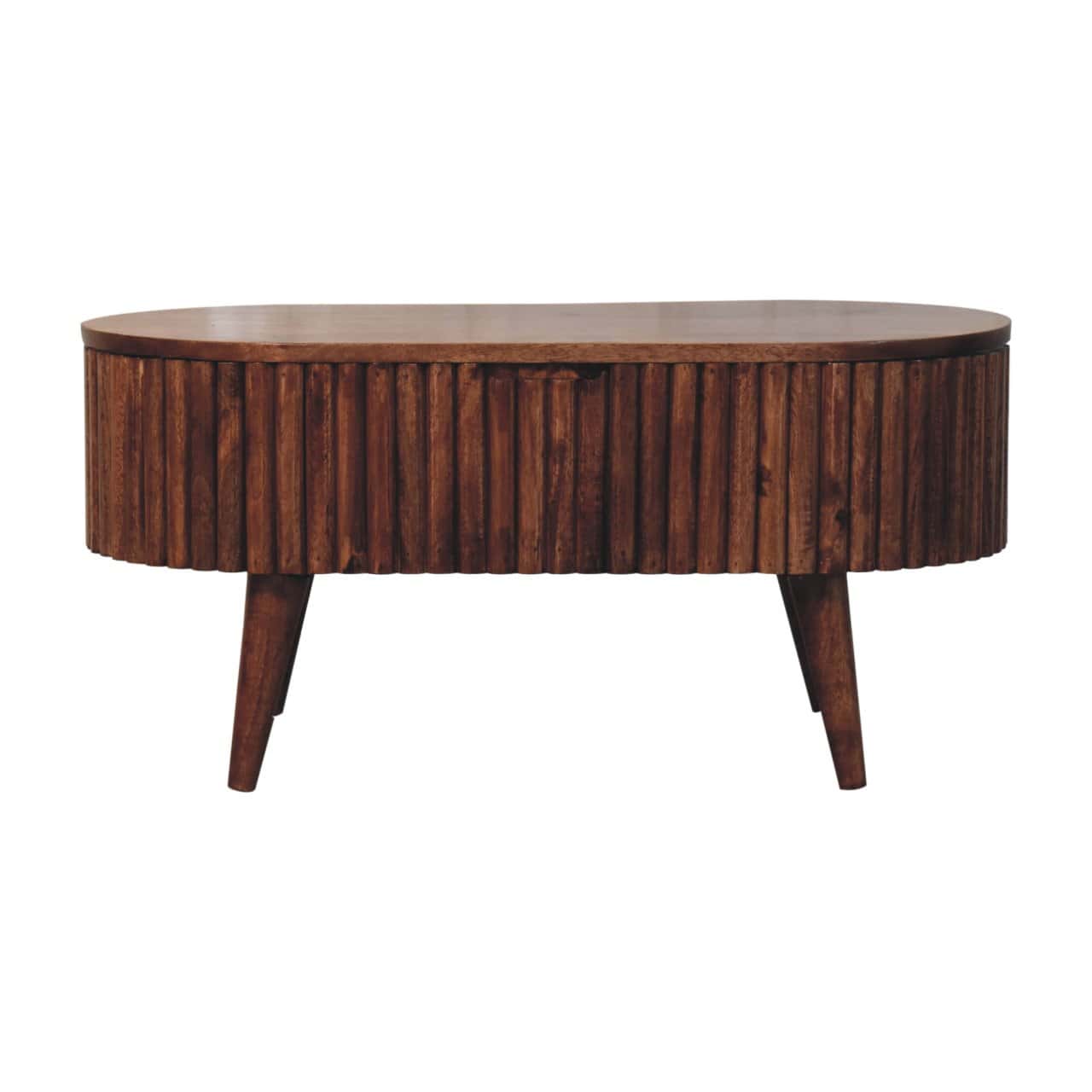
At Dukes Home Interiors, our coffee table collection brings together a wide range of designs for different living spaces and interior styles. From understated contemporary tables to more distinctive centrepieces, the range makes it easy to compare shapes, finishes and proportions in one place.
Whether you are furnishing a new living room or looking for a table to complete an existing scheme, you can explore designs suited to compact spaces, generous seating areas and everything in between.
How to Choose a Coffee Table for Your Living Room
A coffee table sits at the centre of the living room, so choosing the right one is about more than finding a design you like. Start by looking at your sofa, seating arrangement and the amount of open floor space available. The table should feel connected to the surrounding furniture without making the room difficult to move through.
Think about how you use the space as well. If the table will regularly hold drinks, books and everyday items, surface area may be a priority. If your living room is smaller or the table is mainly decorative, a more compact design or one with an open base can help keep the room feeling spacious.
The best choice should work practically while also contributing to the overall character of the room.
Coffee Table Materials and Finishes
The material and finish of a coffee table can change how substantial, light or decorative it feels within a room. Rather than choosing a material in isolation, consider the flooring, sofa, side tables and other finishes already present in your interior.
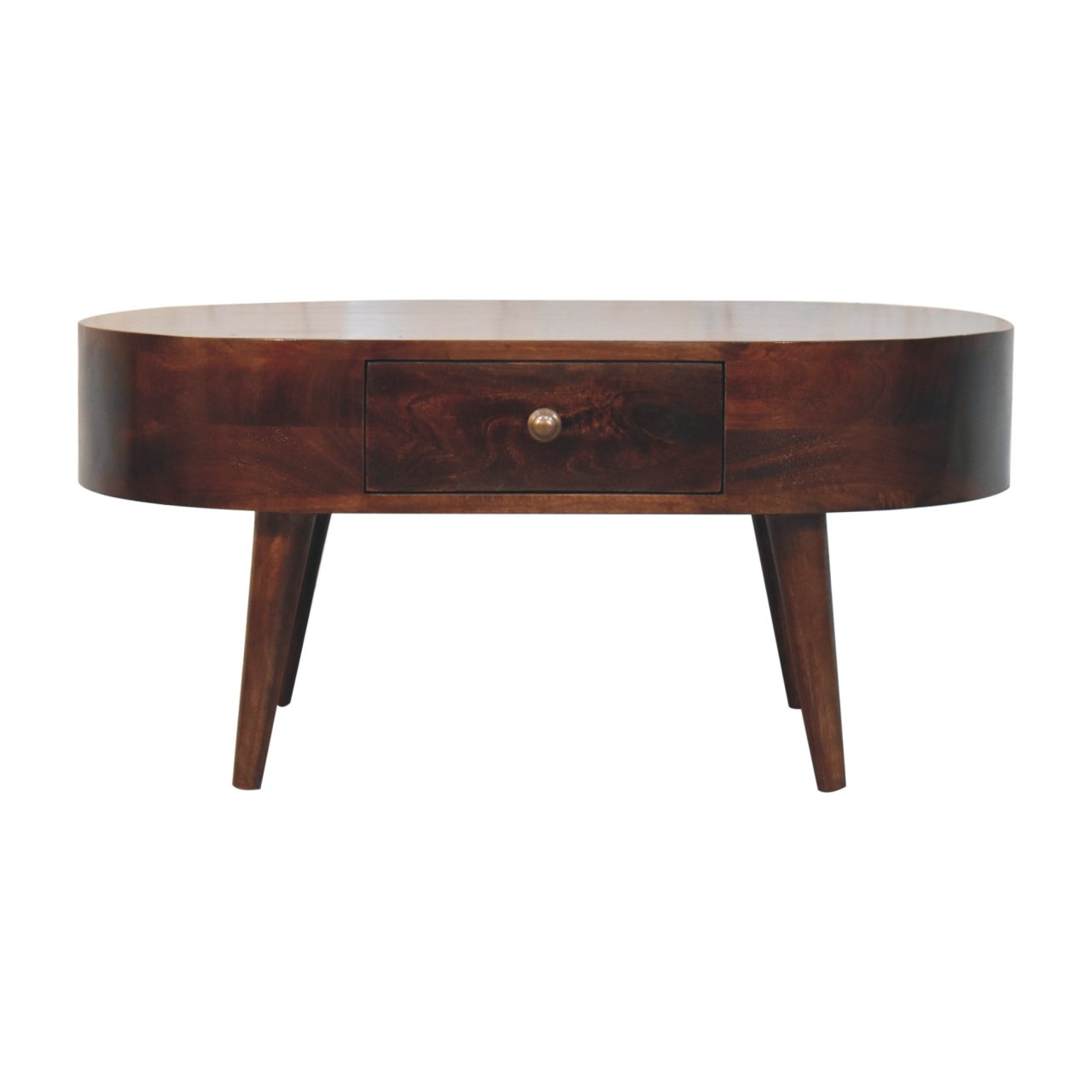
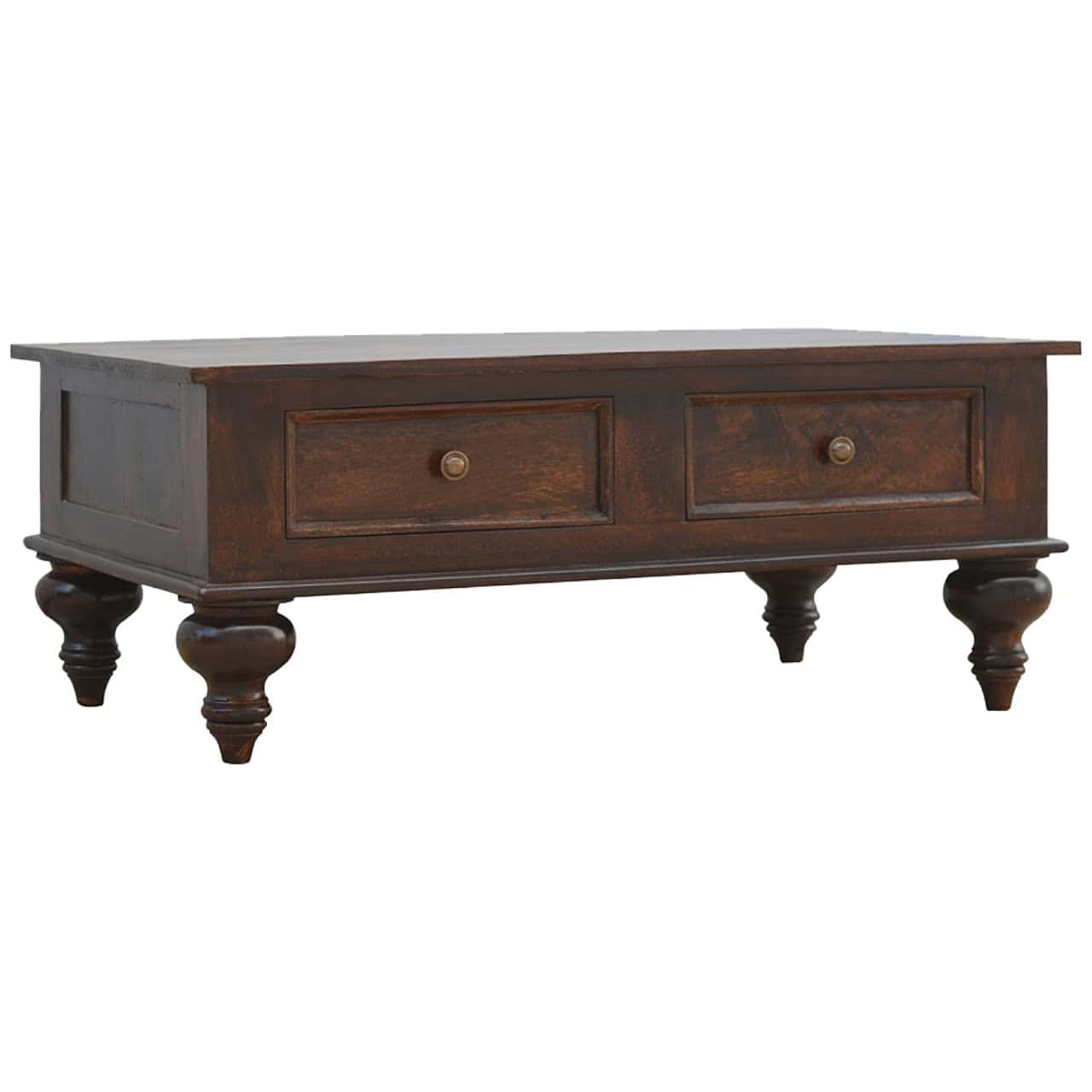
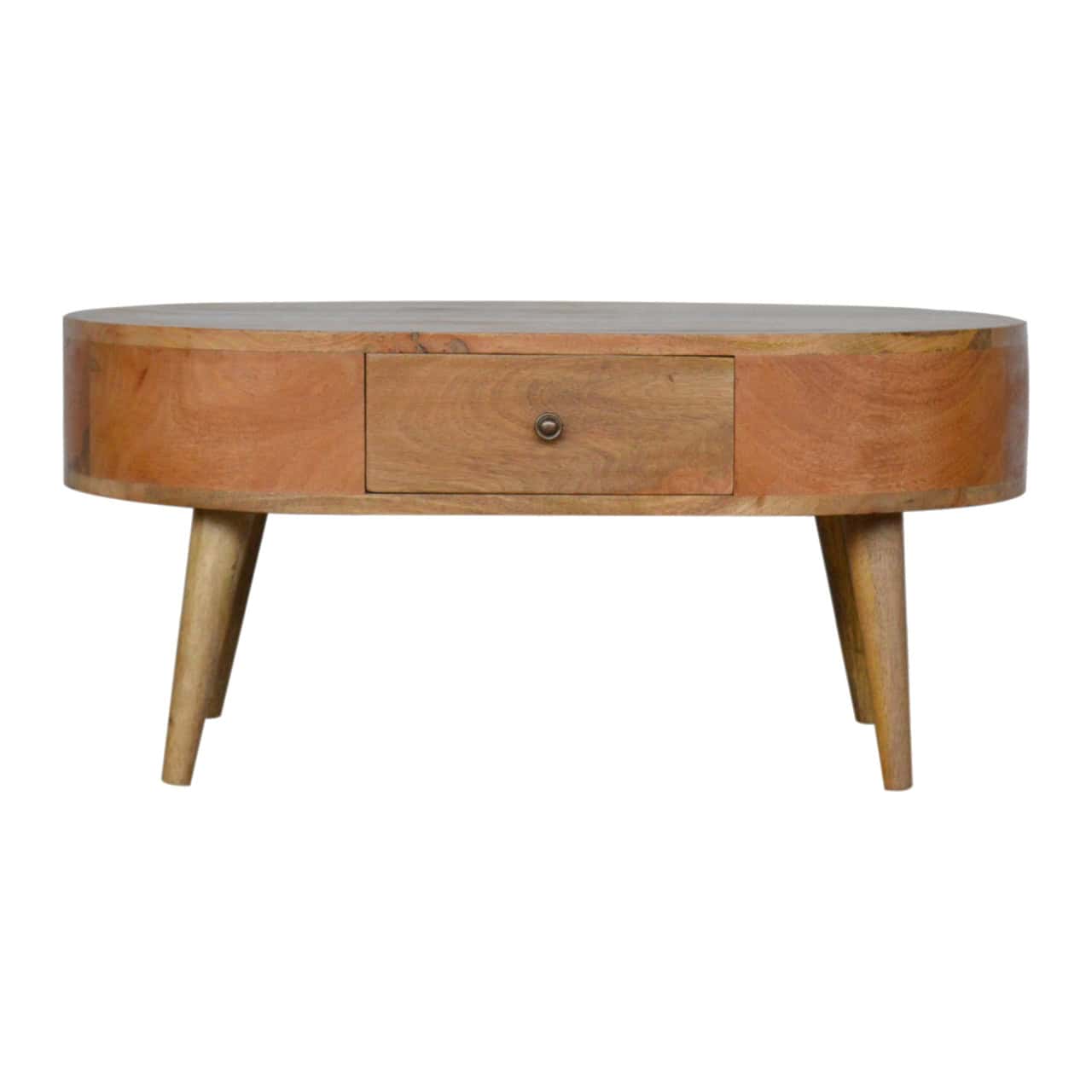
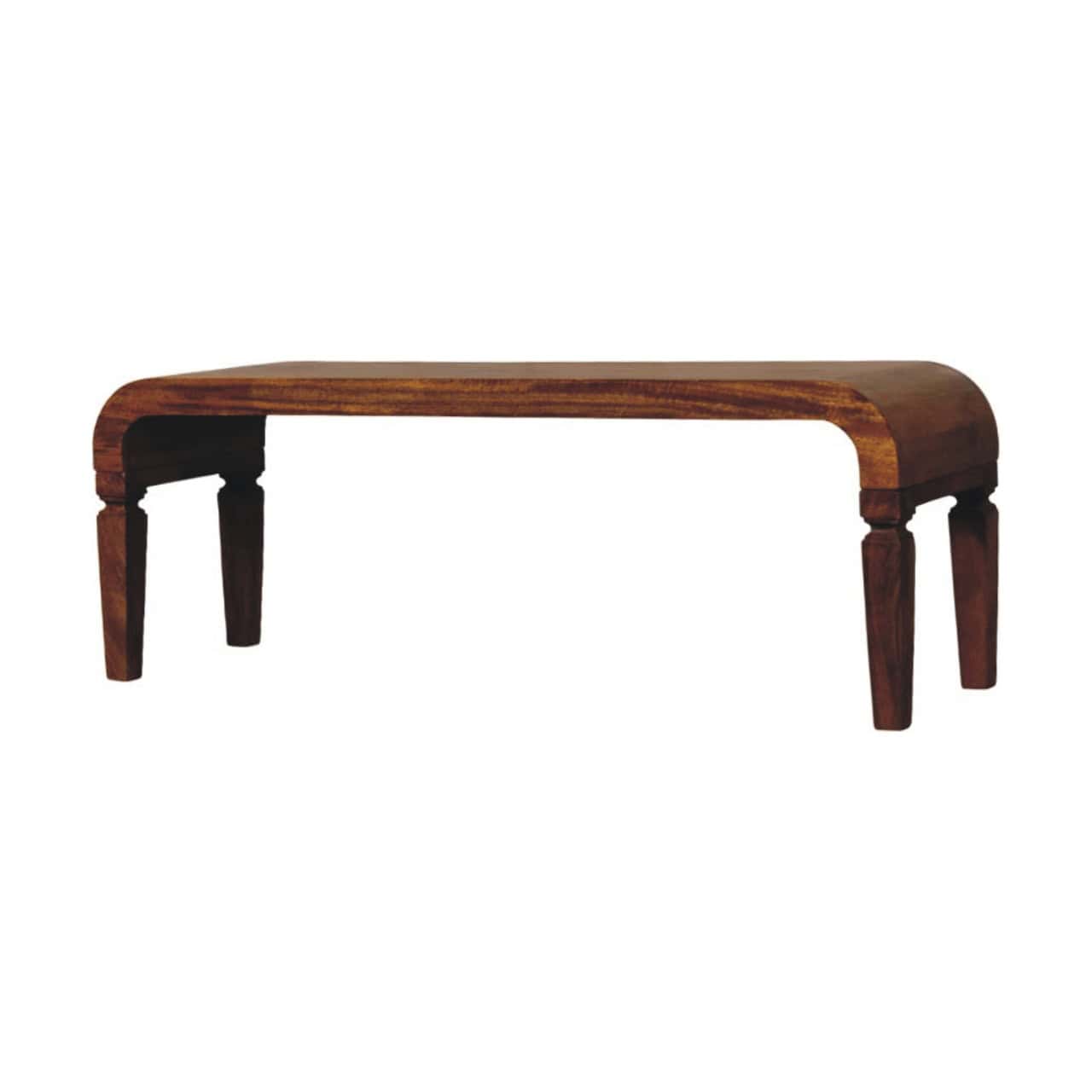
Wood introduces natural warmth and texture and can work particularly well in relaxed, neutral or more traditional schemes. Lighter woods tend to have a softer appearance, while darker finishes can give a coffee table greater visual presence.
Glass is useful when you want the table to have less visual weight. Allowing the floor or rug beneath to remain visible can make glass coffee tables particularly effective in compact living rooms or interiors where other furniture already provides plenty of colour and texture.
Metal can create contrast and definition. Black and darker finishes can add structure, while warmer metallic tones can introduce a more decorative element and coordinate with lighting, handles and other details elsewhere in the room.
Marble-effect, stone-effect and other textured surfaces can make a stronger statement. These finishes work particularly well when the coffee table is intended to become a focal point rather than simply provide a practical surface.
Mixed-material designs combine these characteristics and can be an effective way to introduce several textures without making the room feel overly coordinated.
Choosing the Right Coffee Table Shape
The shape of your coffee table should relate to the furniture around it as well as the way people move through the room.
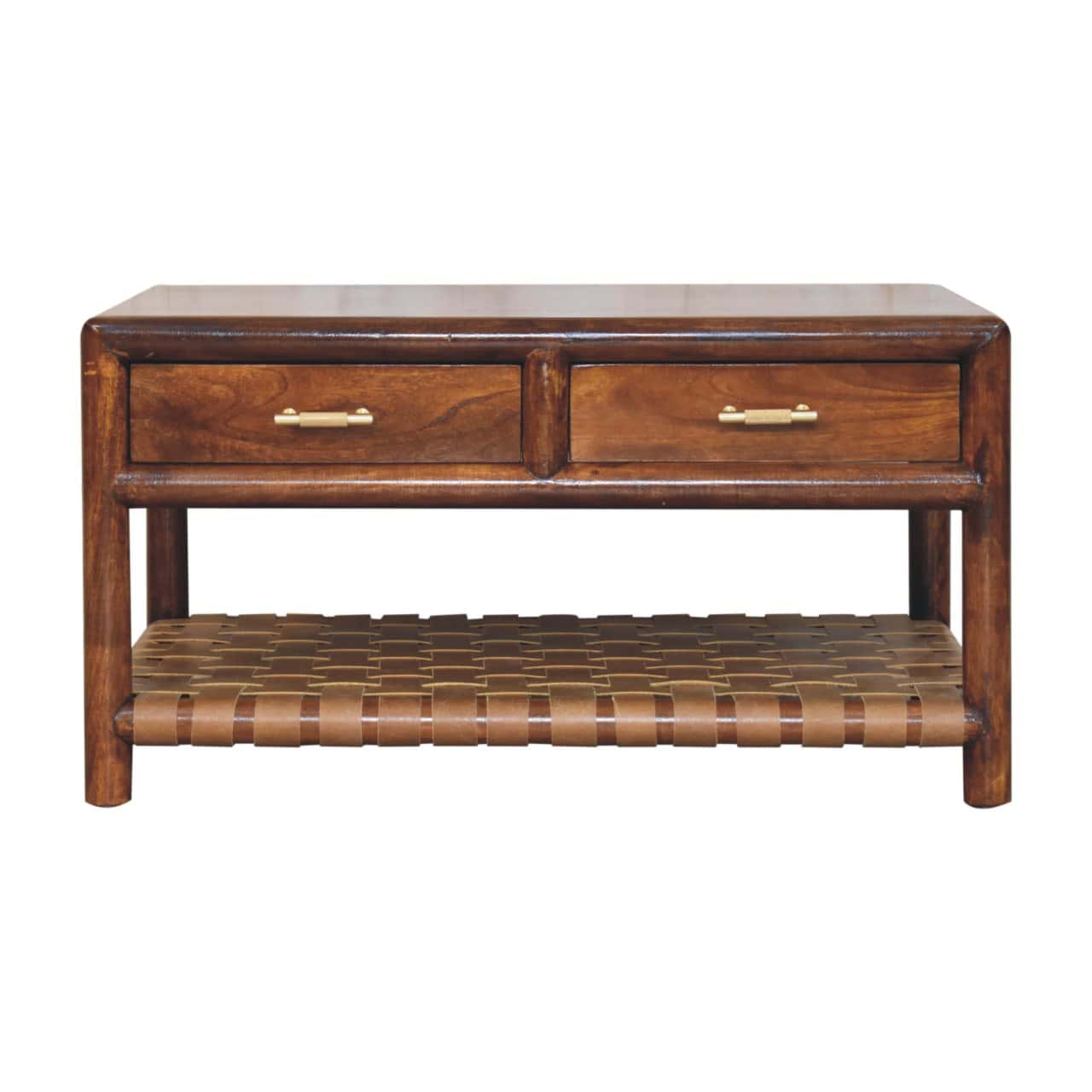
Rectangular coffee tables are a natural choice alongside longer sofas and can provide plenty of usable surface space without extending too far into the room. Square designs often work well within wider or more symmetrical seating arrangements where furniture surrounds the table from several directions.
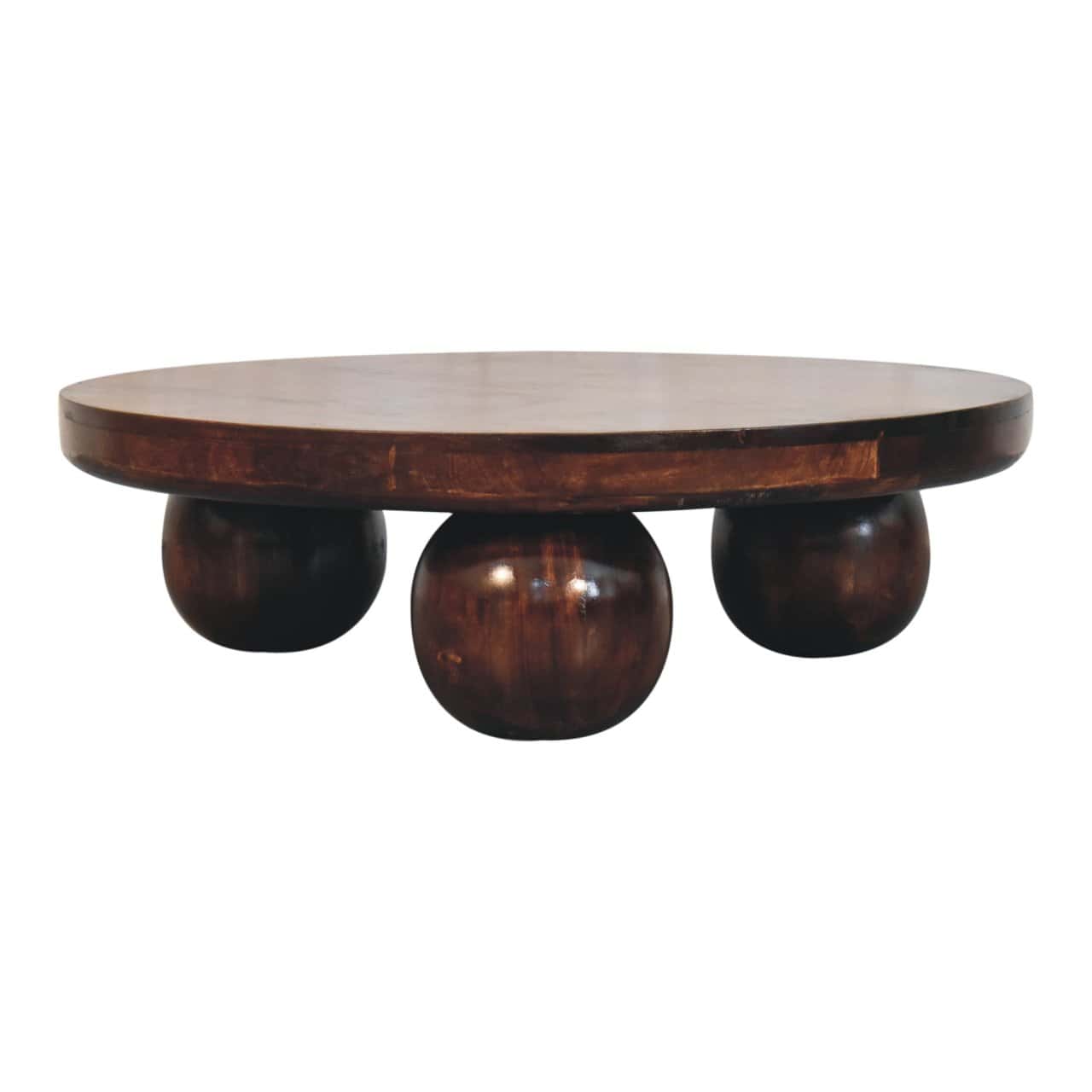
Round coffee tables introduce softer lines and can be particularly useful where space around the table is limited. Their curved edges can make movement through a smaller seating area feel easier and provide a contrast to angular sofas and cabinetry.
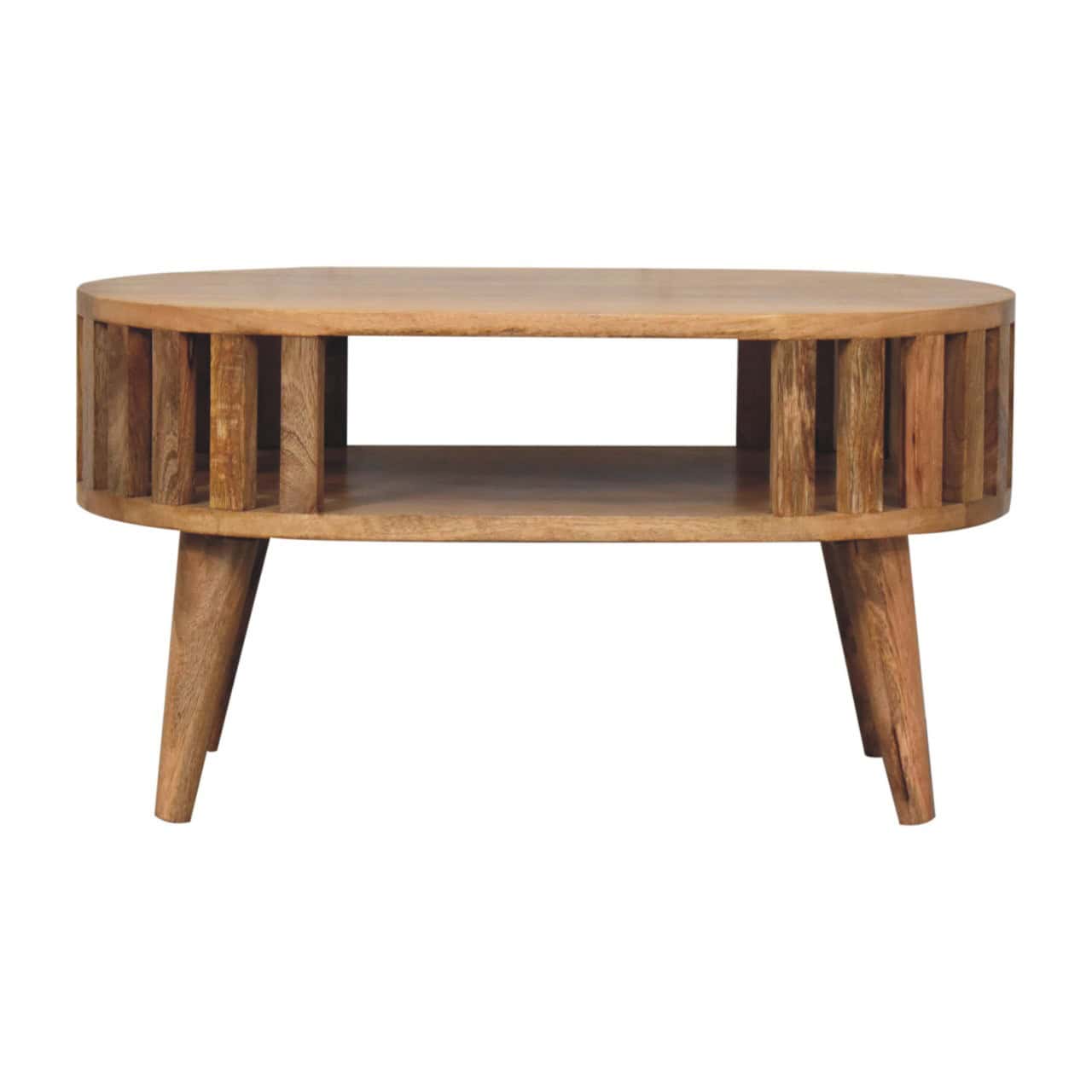
Oval tables offer many of the practical benefits of a rectangular table while creating a softer outline. They can work particularly well where you need useful surface area but do not want the table to feel too rigid within the room.
There is no single shape that is right for every living room. The best option is the one that complements the proportions and layout of your seating area.
Getting the Size and Proportions Right
Before ordering a coffee table, measure the space available between your sofa and surrounding furniture. It can be useful to mark out the dimensions of a table on the floor so you can see how much space it will occupy before making a decision.
A coffee table should normally be easy to reach from the main seating position while still leaving enough room to walk comfortably around it. It should also feel proportionate to the sofa. A very small table can look lost in front of a large sofa, while an oversized design can make a compact seating area feel crowded.
Height matters too. Coffee tables generally feel most natural when their surface sits around the height of the sofa seat or slightly below it, although the ideal proportion will depend on the furniture and how you plan to use the table.
Consider visual weight as well as physical dimensions. A glass or open-framed table can appear lighter than a solid wooden or stone-effect design of exactly the same size, which can make a significant difference in a smaller room.
Statement Piece or Something More Understated?
Not every coffee table needs to be the main feature of the room. The right approach depends on what else is competing for attention.
If your sofa, rug or artwork already provides a strong focal point, a simpler coffee table can help balance the scheme. Clean lines, restrained finishes and lighter materials allow the table to support the surrounding furniture rather than compete with it.
Alternatively, a distinctive shape, substantial proportions or an unusual combination of materials can turn the coffee table itself into a statement piece. This can work particularly well in a more neutral room where the furniture provides the main source of texture and character.
Thinking about the role you want the table to play can make it much easier to narrow down a large collection of designs.
Consider How You Will Use Your Coffee Table
How the table will be used should influence the design you choose. A larger surface can be useful if you regularly entertain or want space for drinks, books and decorative pieces. Smaller designs may be better suited to rooms where maintaining open floor space is more important.
Nesting tables offer additional flexibility because individual tables can be moved when extra surface space is needed and grouped together again afterwards. Designs with lower shelves or storage can also help keep frequently used items close at hand without covering the main tabletop.
If the table will be used heavily every day, consider the practical characteristics of the surface as well as its appearance. Care requirements vary between materials and finishes, so always check the individual product information before buying.
Styling and Positioning Your Coffee Table
Once your coffee table is in place, a few carefully chosen accessories are often more effective than filling the entire surface. Books, a decorative tray, a vase or a sculptural object can add personality while leaving enough room for the table to remain useful.
Look at the coffee table as part of the wider living room rather than as an isolated piece of furniture. Repeating a colour, material or finish already found in your side tables, lighting or other accessories can help connect different elements of the room without everything needing to match.
Placement is equally important. Keep the table close enough to the seating to be practical while preserving comfortable space around it. The result should feel balanced when viewed from across the room as well as when you are sitting on the sofa.
Frequently Asked Questions About Coffee Tables
How far should a coffee table be from the sofa?
The coffee table should be close enough to reach comfortably while leaving sufficient room to move between the table and sofa. The exact distance will depend on the depth of your seating and the overall dimensions of the room.
How long should a coffee table be compared with a sofa?
A coffee table will usually look more balanced when it is shorter than the sofa behind it rather than extending across its full width. The overall proportions are more important than following one exact measurement, particularly with modular or unusually shaped sofas.
Should a coffee table be higher or lower than a sofa?
Most coffee tables sit around the same height as the sofa seat or slightly below it. This tends to make the surface comfortable to use while maintaining balanced proportions within the seating area.
Can I use a round coffee table with a corner sofa?
Yes. A round coffee table can work particularly well with a corner sofa because its curved shape contrasts with the straight lines of the seating and can make it easier to move through the open side of the arrangement.
Does my coffee table need to match my side tables?
No. Coffee tables and side tables do not need to come from the same collection. Using a common material, colour or design detail can create continuity, while mixing complementary pieces can give the room a more considered and less uniform appearance.
Are nesting coffee tables suitable for small living rooms?
Nesting coffee tables can be a practical choice for smaller spaces because they provide additional surfaces when required without permanently occupying the same amount of floor space as several separate tables.
What should I consider when buying a coffee table online?
Check the full dimensions, materials, finish and product photographs carefully before ordering. Measuring the intended position in your living room beforehand will also give you a much better idea of how the table will relate to your sofa and surrounding furniture.